


If you’ve noticed dark patches, a musty smell, or mould on plaster walls, you’re not alone. Understanding the plaster mould meaning is important, as it refers to fungal growth caused by excess moisture in walls. Mould is a common problem in UK homes, especially in older properties and damp environments. Beyond being unsightly, mould is a serious health concern, linked to asthma, allergies, and respiratory irritation.
The issue is that plaster is porous, meaning it absorbs and holds moisture easily, creating the ideal breeding ground for mould. At Disaster Care Capital, we’ve seen how mould on plaster can quickly spread if ignored, turning a small cosmetic issue into a serious structural and health risk.
This article will cover what causes mould on plaster, how to remove it safely, and—most importantly—how to stop it returning.
What Causes Mould on Plaster?
Mould doesn’t appear randomly. It needs three things: moisture, a food source, and still, humid air. Remove the moisture and you remove the problem. The most common causes in UK homes are:
- Condensation — steam from showering, cooking, and drying clothes indoors settles on cold plaster, which is the leading cause of mould in modern homes.
- Leaking pipes or roofs — even a slow, hidden drip keeps plaster wet enough to sustain growth.
- Rising damp — moisture travelling up from the ground through walls, typically leaving mould and tide marks low down.
- Penetrating damp — water getting in through cracked render, faulty pointing, or blocked gutters.
- Poor ventilation — bathrooms, kitchens, and bedrooms without airflow trap humid air against cold surfaces.
Mould can begin growing in as little as 24 to 48 hours once a surface stays damp, which is why acting quickly after a leak or flood matters so much.
Read also: how to stop mould in bedroom
Mould, Mildew or Efflorescence? How to Tell Them Apart
Not every mark on a wall is mould, and the right treatment depends on getting this right.
| Marking | Appearance | What it is | Treatment |
|---|---|---|---|
| Mould | Black, green, or grey; often slimy or fuzzy, spreads in patches | Active fungal growth | Fungicidal treatment + fix the moisture source |
| Mildew | Flat, powdery, grey or white surface film | A milder surface fungus | Usually wipes away with a cleaner; improve ventilation |
| Efflorescence | White, crystalline, powdery deposit | Mineral salts left behind as water evaporates — not fungal | Brush off dry; address the source of moisture |
If the deposit is white and powdery, it’s likely efflorescence rather than mould, and the fix is different. Read also: How to treat efflorescence on interior walls
Signs of Mould on Plaster Growth
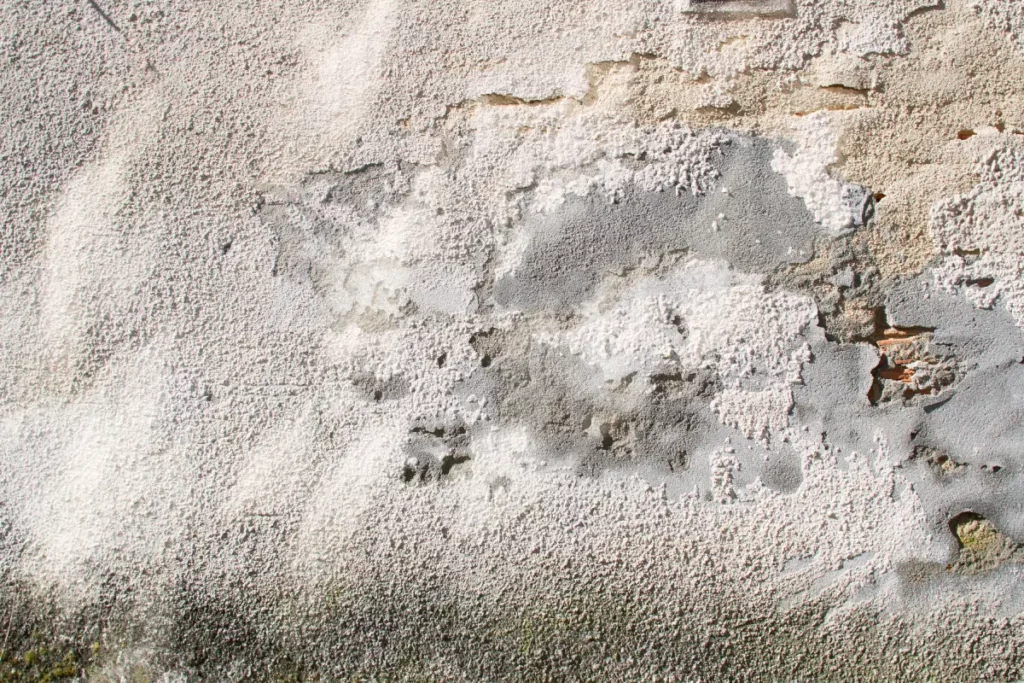
Mould on Plaster can be both visible and hidden. Common indicators include:
- Dark or discoloured patches (black, green, brown, or grey) on walls or ceilings
- A persistent musty or damp smell, especially in enclosed rooms
- Peeling, bubbling, or flaking paint or plaster
- Cold or damp patches when you touch the wall
- Increased condensation on nearby windows and surfaces
- Health symptoms that worsen indoors — coughing, sneezing, itchy eyes, or asthma flare-ups
Spotting these early is the difference between a wipe-down and a strip-out, so treat the first signs seriously.
Why Mould on Plaster Is a Problem
- Health risks: The NHS warns that damp and mould can trigger asthma attacks, worsen allergies, and cause respiratory infections, with the very young, elderly, and immunocompromised most vulnerable.
- Property damage: Mould weakens plaster, lifts paint, and stains finishes; left long enough it can move into timber and insulation behind the wall.
- It spreads: Disturbed mould releases spores that travel through the air and seed new growth elsewhere in the home.
- It’s a recognised hazard: Damp and mould is a defined hazard under the UK’s Housing Health and Safety Rating System (HHSRS) and can be rated a serious “Category 1” risk.
This is why dealing with mould on a plaster wall or ceiling promptly, and at the source, is so important.
How to Remove Mould on Plaster Safely (Step by Step)
For a small, surface-level patch on sound plaster, here’s the safe method professionals use in principle to remove mould on plaster:
- Fix the moisture source first. Cleaning before you stop the damp guarantees the mould returns. Find and resolve the leak, condensation, or rising damp.
- Protect yourself and the room. Wear gloves, goggles, and an FFP2 or FFP3 mask. Open external windows but keep internal doors closed so spores don’t spread, and lay dust sheets to catch debris.
- Apply a fungicidal wash. Wet the area with a specialist mould wash — never dry-brush or sand mould, as that flings spores into the air. Follow the product’s contact time.
- Wipe and remove, don’t just kill. Dead mould can still trigger allergies, so it must be removed, not just decolourised. Wipe clean and repeat on stubborn areas.
- Dry the area completely. Use dehumidifiers, heaters, or fans. Lingering moisture is the number-one reason coatings and repairs fail.
- Reseal and redecorate. Once fully dry, apply a stain-blocking/mould-resistant primer, then finish with an anti-mould emulsion.
If the plaster stays soft, the stain bleeds back through, or it’s plasterboard that has swollen, cleaning won’t hold — that wall needs cutting back and reinstating.
When to DIY and When to Call a Professional for Mould on Plaster
| Situation | Recommended approach |
|---|---|
| Small surface patch under ~1m², sound wall, obvious cause | DIY-friendly with a fungicidal wash and PPE |
| Mould larger than ~1m² | Professional remediation advised |
| Recurring mould that keeps coming back | Professional — the moisture source hasn’t been resolved |
| Soft, swollen, or stained-through plasterboard | Professional strip-out and reinstatement |
| Anyone in the home has asthma, allergies, or is immunocompromised | Professional, to avoid spore exposure |
| Mould after a flood, burst pipe, or sewage escape | Professional, with structural drying |
As a rule of thumb, the NHS and most UK specialists suggest professional help for anything beyond about one square metre, or where health risks are present. Professional remediation typically follows the IICRC S520 standard: containment to stop spores spreading, HEPA air filtration, removal or treatment of affected materials, antimicrobial treatment, and verification once finished.
Can You Paint Over Mould on Plaster?
No — painting over live mould only hides it temporarily. The growth continues beneath the paint and reappears within weeks, often worse, because the moisture and spores are still there. Even the best anti-mould paint needs a clean, dry, mould-free, sealed surface to bond to.
The correct order is: stop the moisture → kill and remove the mould → dry fully → apply a stain-blocking primer → finish with anti-mould emulsion. Skipping straight to paint is the most expensive shortcut you can take.
How Much Does Professional Mould Removal Cost in the UK?
Costs depend on the size of the affected area, the severity, access, and whether materials need replacing. As a rough 2026 guide, small surface-level jobs typically start in the low hundreds of pounds, multi-room or medium contamination runs into four figures, and extensive or structural cases involving strip-out and drying can reach several thousand. Catching it early is by far the cheapest route — a modest treatment now can prevent a major remediation later.
For a detailed breakdown and a free, no-obligation quote, see our dedicated guide: Mould removal price UK.
How to Prevent Mould on Plaster
Prevention always costs less than remediation. The four pillars:
- Maintain the building. Check for cracked plaster, failing pointing, blocked gutters, and roof or plumbing leaks before they escalate.
- Improve ventilation. Use extractor fans in bathrooms and kitchens, open windows after showering and cooking, and avoid drying clothes indoors where possible. Pull furniture slightly away from external walls so air can circulate.
- Control moisture and humidity. Aim to keep indoor humidity between 40–60%, use a dehumidifier in problem rooms, and fix leaks quickly.
- Reduce cold surfaces. Insulation and adequate, consistent heating reduce the condensation that cold plaster attracts.
Conclusion on Mould on Plaster
Finding Mould on Plaster can be alarming, but the path forward is consistent: stop the moisture, remove the mould safely with the right products, dry the wall fully, and seal it before redecorating. Small surface patches are often a manageable DIY job — but bleach is the wrong tool, and anything large, recurring, soaked into plasterboard, or affecting a vulnerable household needs professional remediation to fix it for good.
At Disaster Care Capital, we help homeowners and landlords across the UK tackle mould at its source — identifying the moisture problem, removing the growth safely, and protecting the property long-term. Get in touch for a free assessment if you want lasting results.
FAQs on Mould on Plaster
Is mould on plaster harmful to health?
Yes, mould spores can cause asthma, allergies, and other respiratory issues.
Do I need to remove mouldy plaster completely?
Not always. If caught early, cleaning and drying may save it, but severe cases may require re-plastering.
How can I stop mould coming back on plaster?
Identify and fix the moisture source, improve ventilation, and use anti-mould paints.
How to treat mould on plaster?
To treat mould on plaster, first ventilate the room and wear protective gloves and a mask. Clean the affected area using a mould remover or a vinegar solution, then allow the wall to dry completely. Finally, fix the source of moisture and repaint with anti-mould paint if necessary to prevent regrowth.
Why is my new plaster going mouldy?
New plaster can go mouldy due to excess moisture, poor ventilation, high humidity, or drying too slowly. If the room isn’t properly aired or there’s condensation, mould can form even on fresh plaster.





