


You glance up one morning and there it is: a yellowish-brown ring on the ceiling. Maybe it is small right now, no bigger than a tea plate. Maybe it appeared overnight after a heavy spell of rain. Or perhaps it has been growing slowly for weeks and you have been telling yourself it will sort itself out.
It will not.
Moisture spots on a ceiling are never a cosmetic problem. They are a symptom — and like any symptom, what matters most is what is causing them. Left unaddressed, that innocent-looking stain can spiral into mould growth, structural deterioration, and genuine health risks for everyone living or working in the building. At Disaster Care Capital, we have seen what happens when ceiling moisture is ignored for weeks and months. It is never a pretty picture.
This guide will walk you through exactly what causes moisture spots on a ceiling, what the different types of staining tell you, the health risks involved, and — critically — when you need professional help rather than a tin of stain-blocking paint.
What Is Actually Causing Those Moisture Spots?
Before you can address ceiling moisture, you need to understand its source, which is where many property owners go wrong. They treat the stain rather than the cause, and then wonder why the problem returns within weeks.
There are four primary causes of moisture spots on a ceiling, and identifying which one you are dealing with is the essential first step.
1. A Leak From Above
This is the most common culprit in properties with an upper floor or a flat roof. A slow drip from a bathroom waste pipe, a leaking shower tray seal, a fractured radiator pipe, an overflowing bath, or water finding its way through a damaged or blocked flat roof — all of these can saturate the ceiling materials above your head before the water ever becomes visible.
A key indicator here is the colour of the stain. In cases where the patch has a brown or darker tone, it is likely that the damp has been caused by water soaking through from above and bringing dust or colouring from the underlying plaster with it. Brown tide marks strongly suggest water has tracked from a source above — often some distance from where the stain appears, since water travels along beams and joists before dripping down.
2. Condensation
Condensation is the most widespread cause of damp in UK homes, and it is particularly prevalent in properties with older housing stock. When warm, moist air generated by cooking, bathing, breathing, and drying clothes meets a cold ceiling surface, the moisture condenses and collects. Over time, this manifests as diffuse damp patches — often without the distinct brown tide mark characteristic of a direct water leak.
Excessive condensation is a leading cause of damp and wet patches. This problem happens when warm moist air hits cold surfaces. The moisture in the air cools down on the surface and forms water droplets. These water droplets collect and over time can build up into damp, mould, and mildew growth.
The average UK household generates roughly 20 pints of moisture per day simply through normal living activities — cooking, showering, breathing, and drying laundry. In a poorly ventilated home, all of that moisture has to go somewhere.
3. A Roof Problem
In properties with a pitched or flat roof above the affected ceiling, damaged or missing tiles, cracked flashing, blocked gutters, or deteriorating felt can all allow rainwater to penetrate. In the UK’s persistently wet climate, this is an especially common cause of ceiling moisture spots — and one that becomes dramatically worse in autumn and winter when rainfall increases and properties face sustained wet spells.
The telltale sign of a roof-related leak is that the staining worsens noticeably after heavy rain and tends to appear directly below the area of roof damage.
4. Penetrating Damp
Penetrating damp occurs when water seeps through an external wall or structure — often caused by defective pointing, damaged render, cracked masonry, or failed window seals. When this moisture tracks inward and upward, it can manifest on ceilings — particularly those adjacent to external walls or below flat roof junctions.
Read also- Removing mould from car seats
The Health Risks You Cannot Afford to Overlook
This is where the urgency becomes non-negotiable. Ceiling damp patches can be a health hazard. When moisture enters a ceiling, it can create a breeding ground for mould and mildew. These fungi can produce spores that can become airborne and potentially cause health problems, particularly for people with respiratory conditions or weakened immune systems.
The NHS is unequivocal on this point. Living in a home with damp and mould significantly increases the likelihood of respiratory infections, asthma, allergies, and ongoing immune system disruption. According to the UK Health Security Agency, around 2 million people in England live in homes with significant damp and/or mould — representing a considerable and largely preventable burden on public health. The NHS estimates that treating illnesses associated with damp and cold housing costs the health service an estimated £1.4 billion every year.
Children in damp homes are almost three times more likely to have breathing problems than those in dry housing. For households with young children, elderly occupants, or anyone with a pre-existing respiratory condition, ceiling moisture is not just a property problem — it is a safeguarding concern.
Beyond respiratory health, there are structural and safety risks that are frequently overlooked. Ceiling damp patches can create health and safety risks if they are left unresolved, especially once mould is visible and moisture is present for long periods. Mould spores can irritate airways, eyes and skin; ceilings can weaken if plaster and timbers stay wet; and damp around electrical fittings can raise questions about the safety of the wiring.
That last point deserves particular emphasis. Moisture spots on a ceiling near or around a light fitting, downlighter, or electrical junction box represent a genuine electrical hazard and should be treated as an emergency requiring immediate professional assessment.
For more info check: GOV.UK Guidance on Understanding the Health Risks of Damp and Mould — the definitive government resource for landlords, tenants, and homeowners on the health and legal implications of damp in residential properties.
Reading the Signs: What Different Moisture Spots Are Telling You
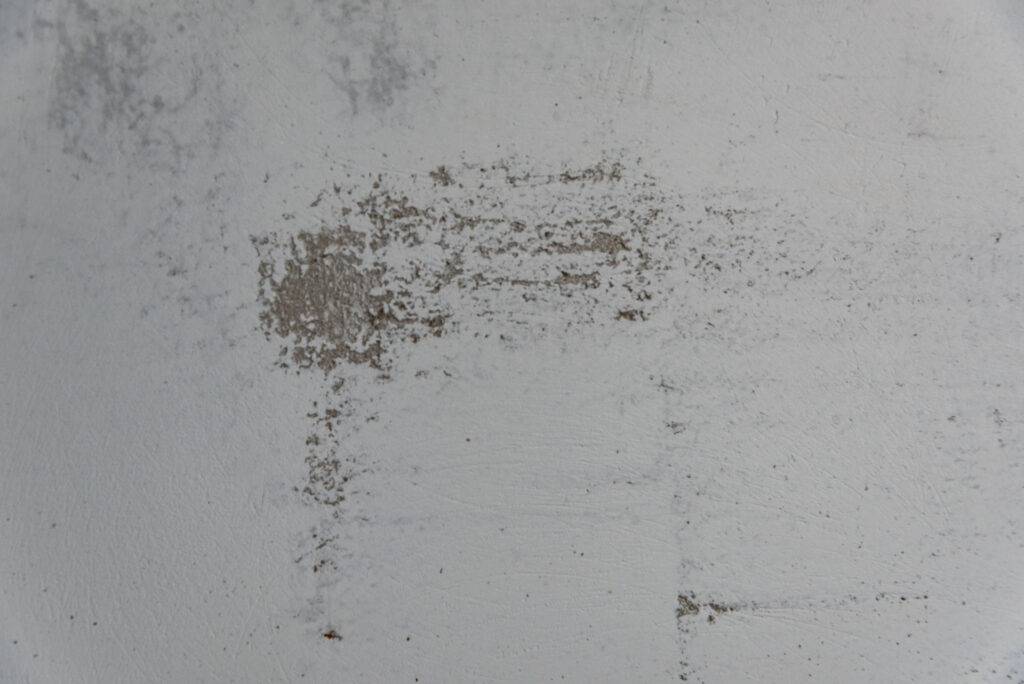
Not all ceiling moisture looks the same, and the appearance of the staining carries useful diagnostic information.
Yellow or brown ring stains with a distinct tide mark usually indicate a water leak from above — a pipe, a bathroom fitting, or a roof. The ring forms as water spreads outward and then dries, leaving mineral deposits at the perimeter.
Diffuse grey or dark patches without a clear ring are more typical of condensation-driven moisture, particularly in rooms with poor ventilation.
Black mould spots forming around or within a moisture patch indicate that the damp has been present long enough for mould spores to colonise the surface. This is the point at which health risks escalate significantly and professional remediation becomes essential.
Sagging or bowing ceiling material indicates that the plasterboard or plaster has been saturated to the point of structural compromise. Do not attempt to poke or press a sagging ceiling — the weight of retained water above can cause sudden and dangerous collapse.
What You Should Not Do
The most common mistake made when moisture spots appear is to paint over them. Applying standard emulsion paint — or even a stain-blocking primer — without addressing the underlying source of moisture will result in the stain returning within weeks. It is a temporary cosmetic fix applied to a structural problem.
Similarly, wiping visible mould from the surface of a ceiling without professional assessment does not remove the mould. Mould grows not only on the surface but within the material itself, and disturbing it without appropriate protective equipment can release large quantities of spores into the air.
If the staining is near any electrical fitting, do not attempt any investigation yourself. Switch off the relevant circuit at the consumer unit and contact a qualified electrician and a damp specialist simultaneously.
Read also- how to clean upholstered furniture
When to Call Disaster Care Capital
There is a straightforward rule of thumb: if the cause of the moisture is not immediately obvious, if the staining is spreading, if there is any visible mould, or if the affected area is near electrical fittings or shows signs of structural weakness — call a professional.
At Disaster Care Capital, we provide expert damp investigation and water damage remediation services across the UK. Our team uses professional-grade moisture detection equipment including thermal imaging cameras and calibrated moisture metres to locate the true source of ceiling moisture — not just the visible manifestation of it.
We do not just treat moisture spots on a ceiling. We trace, diagnose, dry, and remedy the underlying cause, so that the problem is resolved rather than postponed.
For more info check: NHS Guidance on Damp, Mould and Health — clear NHS information on the health effects of living with damp and mould, and practical guidance on addressing the problem.
Frequently Asked Questions
Q: My ceiling has a moisture spot but I cannot find a leak above it. Where is the water coming from?
Water is deceptive — it rarely drops straight down. It will travel horizontally along joists, beams, and pipe runs before dripping down to the ceiling below, which means the visible stain can appear several feet away from the actual source. A bathroom fitting on the floor above, a slow-dripping pipe within the floor structure, or a roof defect offset from the stain are all common culprits. Professional thermal imaging is often the most reliable way to trace the true source without invasive investigation.
Q: Is a small moisture spot on the ceiling serious enough to warrant professional attention?
Yes — particularly if you cannot identify the cause. A small stain today can indicate a slow, ongoing water ingress that is saturating the structural elements above before you see much surface evidence. By the time the stain is large, significant damage may already have occurred. Acting when the stain is small is always preferable to waiting until the problem has escalated into structural damage, mould remediation, or ceiling collapse.
Q: Can moisture spots on a ceiling affect my home insurance claim?
Potentially, yes — but in both directions. Most UK buildings insurance policies cover sudden and accidental water damage. If you can demonstrate that the damage resulted from a sudden event such as a burst pipe or storm-related roof damage, a claim is likely to be valid. However, insurers often challenge claims where there is evidence that a long-standing problem was left unaddressed. Documenting the appearance and progression of ceiling staining, acting promptly when moisture spots appear, and keeping records of professional assessments all support a stronger claim position.





