


It’s rare, but when lightning struck your house, the damage can be sudden and severe. If you’ve ever wondered what actually happens when lightning hits a property, how to spot the warning signs, and what you should do in the first few minutes, you’re in the right place. At Disaster Care Capital, we handle property restoration across London, so we’ve seen the damage a strike can cause firsthand. Here’s everything you need to know.
What Happens If Lightning Struck Your House?
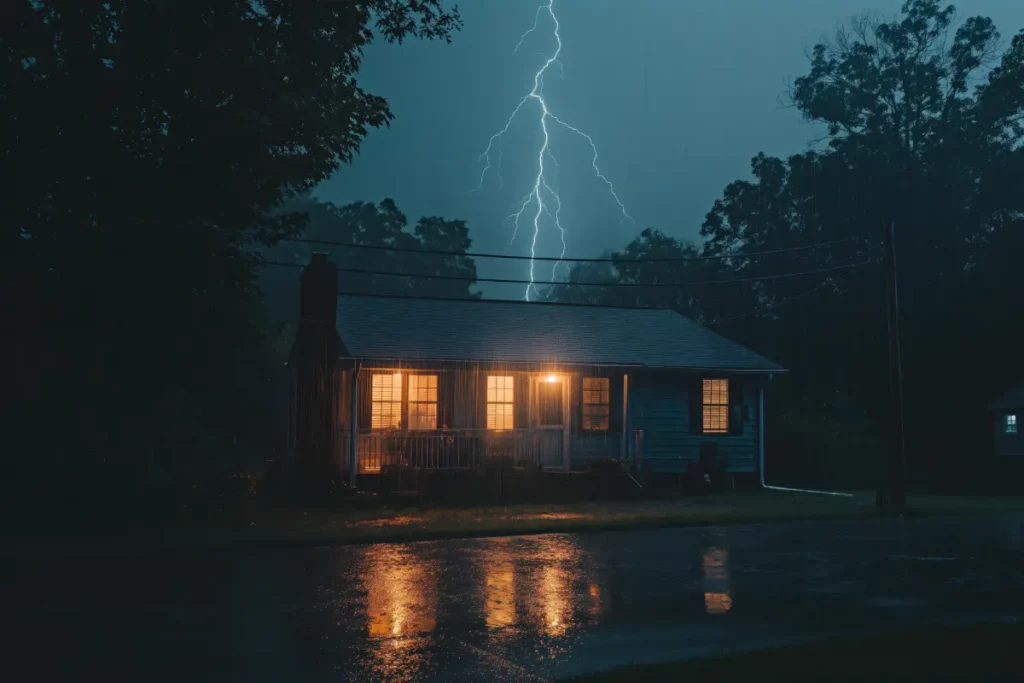
If Lightning Struck Your House, it follows the path of least resistance. It may strike the roof, an aerial, a chimney, or a tree close to the property. From there, the electrical current can travel through your wiring, metal pipes, phone lines, and even water lines.
If you’re wondering what happens if lightning strikes a house? The result is often extensive damage, including:
- Fires in the roof or attic
- Electrical surges that destroy appliances
- Damaged plumbing
- Cracked masonry or chimneys
- Shock risks to anyone inside
Direct Strike vs. Nearby Strike: Why Your Home Can Be Damaged Without a Direct Hit
A lot of people assume their home is only at risk if lightning lands directly on the roof. In reality, there are three ways a strike can cause damage, and two of them don’t involve a direct hit at all.
- Direct strike. Lightning hits the building itself — usually the highest point, such as a chimney, aerial, or roofline. This causes the most concentrated structural and fire damage.
- Side flash. Lightning strikes something nearby, like a tree, then “jumps” across to your house because it offers an easier route to the ground. This is common in properties with trees close to the walls.
- Ground current. When lightning hits the ground near your home, the current spreads outwards through the soil and can enter via buried pipes, cables, and foundations. This is the most common cause of damage, and it’s why homes that were never directly hit can still lose their electrics.
Understanding this matters because it explains how a strike “down the road” can still fry your appliances or trip your consumer unit.
How to Tell If Lightning Struck Your House
Sometimes the damage isn’t obvious straight away. Here are the key signs that lightning struck your house:
- Sudden power outage or flickering lights
- Burn marks on walls or outlets
- A burning smell or smoke
- Cracked bricks or concrete
- Electronics that have stopped working
- Charring around the roof or loft
If you notice any of these, it’s important to act fast.
What to Do If Lightning Struck Your House?
- Stay safe first. If there’s a fire or heavy damage, leave the house and call emergency services.
- Don’t touch metal objects, water sources, or damaged appliances.
- Turn off the power at the mains if you suspect electrical damage.
- Contact a professional property restoration team like Disaster Care Capital.
- Document the damage with photos and videos for your insurance.
- Call your insurance provider to start your claim.
What to Do With Your Electronics and Appliances After Lightning Struck Your House
One of the most common questions we hear is whether it’s safe to switch everything back on once the storm passes. The short answer: be cautious.
- Don’t rush to power everything up. A surge can leave hidden faults in an appliance that looks fine. Turning it on can cause a short, a spark, or in rare cases a fire.
- Unplug sensitive electronics — TVs, computers, routers, games consoles — before restoring power at the mains, then reconnect them one at a time.
- Watch for warning signs as you do: buzzing, a burning smell, warmth around the plug, or a device that won’t start properly. If you notice any of these, unplug it and have it checked.
- Check your consumer unit (fuse box). A tripped breaker that won’t reset, or scorching around it, is a clear sign you need a qualified electrician before going any further.
When in doubt, leave it off and get an inspection. Replacing a device is cheaper than dealing with an electrical fire.
Why You Shouldn’t Ignore Minor Damage
Even if a house hit by lightning doesn’t catch fire immediately, the electrical damage alone can create long-term hazards. We’ve seen cases where hidden damage from a lightning strike later led to electrical fires, appliance failures, or even plumbing leaks. Always arrange a professional inspection after a lightning strike — the cost of checking is far lower than the cost of a problem that goes unnoticed.
Hidden Damage: What to Watch For in the Days and Months After Lightning Struck Your House
Lightning damage often reveals itself slowly. Here’s a rough timeline of what to keep an eye on so nothing is missed.
- First 48 hours: flickering lights, breakers that trip repeatedly, a faint burning smell, or appliances behaving oddly. Check your roof and loft for scorch marks if it’s safe to do so.
- First week: intermittent power to certain sockets, Wi-Fi or phone lines that have stopped working, and any damp patches that suggest a plumbing joint was weakened.
- First few months: unexplained leaks, recurring electrical faults, and small cracks appearing in masonry or around the chimney as stressed materials settle.
If anything on this list appears, treat it as connected to the strike until a professional confirms otherwise.
What a Professional Inspection Actually Involves
Most homeowners have no idea what’s checked after Lightning Struck Your House, which makes it hard to know whether a quick look is enough. A thorough inspection should cover:
- Electrical system: the consumer unit, wiring, sockets, and earthing, tested to confirm nothing was damaged or left unsafe.
- Roof, chimney, and structure: checked for cracks, displaced tiles, scorching, and weakened masonry — often the entry point for a strike.
- Plumbing and pipework: inspected for damage where current may have travelled through metal pipes, which can cause slow leaks later.
- Fire and smoke residue: even a small, self-extinguished fire in the loft can leave damage that needs treating.
- Moisture and damp: if any water was involved, the affected areas are assessed and dried properly to prevent mould.
Staying Safe During the Storm Itself
If you’re reading this mid-storm, before any strike, a few simple precautions reduce the risk to you and your home:
- Stay indoors and away from windows, doors, and anything metal.
- Avoid using corded phones, desktop computers, and other wired electronics.
- Don’t use taps, showers, or sinks — plumbing can carry a charge.
- Unplug valuable electronics if you can do so safely before the storm intensifies.
- Bring pets indoors and keep them calm and away from windows; animals can be badly frightened and may bolt.
How to Protect Your Home From a Lightning Strike
You can’t stop lightning itself — it’s a natural weather event no one can control. But you can reduce the risk of serious damage and protect the people inside with a few practical steps:
- Install a lightning protection system. Lightning rods and conductors channel a strike safely into the ground, stopping it from travelling through your home’s structure.
- Use surge protectors. These guard your electronics and appliances against the sudden power surges a nearby strike can cause.
- Check your home’s earthing system. Make sure your electrical earthing meets current standards so excess electricity can discharge safely into the ground.
- Avoid wired devices during storms. Unplug or stay away from landline phones, desktop computers, and other plugged-in electronics during a thunderstorm to reduce the risk of electric shock.
These precautions won’t stop a strike, but they will minimise both the damage and the danger if lightning struck your house.
How Disaster Care Capital Can Help if Lightning Struck Your House
We’re not just about cleaning up — we’re about restoring your peace of mind. After lightning struck your house, we:
- Work directly with your insurer to streamline your claim
- Inspect structural and electrical damage
- Safely dry out any water-damaged areas
- Handle fire and smoke restoration if needed
- Repair affected building materials
With over 15 years of experience across London and the surrounding areas, we know exactly what to look for and how to get your home back to normal after Lightning Struck Your House.
Explore our fire restoration, leak detection, and content removal and storage services to see how we can help after a strike.
What Does Lightning Damage Cost to Repair?
Repair costs vary widely depending on what was hit. A blown set of appliances and a tripped consumer unit may run into the hundreds, while structural repairs to a roof, chimney, or rewiring can climb into the thousands. The good news: most UK home insurance policies cover lightning damage, which is why documenting everything and getting a professional inspection early matters so much for your claim.
FAQs
What should I do immediately after a lightning strike to a house?
Turn off the power, leave the property if unsafe, and contact professionals right away.
Is damage from lightning covered by insurance?
Most home insurance policies do cover lightning damage. Always check your policy.
Can lightning strike the same house twice?
Yes, lightning can strike the same place more than once. If your house is in a high-risk area, consider installing protection systems.
How quickly should I get an inspection after a lightning strike?
Immediately. Even if there’s no visible damage, hidden electrical or structural faults could pose future risks.
Can lightning strike a house?
Yes — lightning can definitely strike a house. In fact, tall structures, houses on hills, or homes with metal features (like antennas, chimneys, or metal roofs) are more likely to be struck.
Is it safe to sleep on the floor during lightning in your house?
No, you do not normally need to sleep on the floor during a lightning storm. The safest place is inside a well-built building, away from windows, electrical appliances, plumbing, and wired devices. Sleeping on the floor does not provide special protection from lightning. If lightning is striking nearby, stay indoors and avoid contact with anything that conducts electricity.





