


You notice condensation on your bedroom windows every morning. There is a faint musty smell in the corner of the bathroom that will not go away no matter how often you clean. Your child has been complaining of a persistent cough, and you cannot work out why. The wallpaper in the spare room has started to bubble slightly at the edges.
None of these things happen by accident. In almost every case, they are symptoms of the same underlying issue: indoor humidity that sits outside the safe range for too long.
Understanding the ideal humidity in a UK home is not a technical exercise reserved for surveyors and environmental health officers. It is practical, essential knowledge for every homeowner and tenant in the country, because the UK’s climate, our housing stock, our lifestyle habits, and our increasingly airtight modern buildings create conditions in which humidity problems are not just common, but almost inevitable if they are not actively managed.
This guide explains exactly what the ideal humidity level is for a UK home, why it matters for your health and your property, what happens when it goes wrong in either direction, how to measure it, and how to fix it. At Disaster Care Capital, we deal daily with the consequences of humidity that has been left unmanaged for too long. We know the damage it causes. We want to help you avoid it.
What Is Relative Humidity and Why Does It Matter?
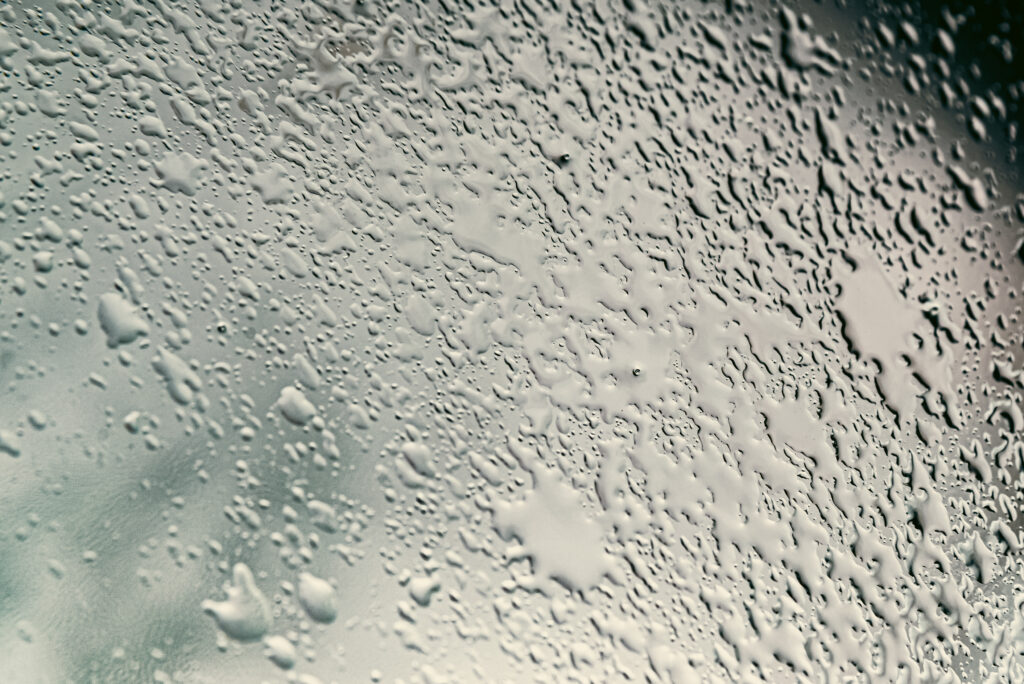
Before discussing the ideal humidity in a UK home, it is worth spending a moment on what relative humidity actually means — because it is frequently misunderstood.
Relative humidity (RH) is a measure of how much water vapour is present in the air, expressed as a percentage of the maximum water vapour the air could hold at its current temperature. At 100% RH, the air is fully saturated — any further moisture will condense as liquid water on the nearest cool surface. At 50% RH, the air is holding half of its maximum possible moisture load.
The crucial point is that this is a relative, temperature dependent measure. Warm air can hold significantly more moisture than cold air. This means that the same absolute quantity of water vapour in the air will produce a higher relative humidity reading in a cold room than in a warm one. This is why damp specialists always record both temperature and relative humidity together — because the number alone does not tell the full story.
It is also why condensation tends to appear in the coldest parts of a room — windows, external corners, behind large items of furniture against outside walls — even when the humidity reading in the centre of the room appears perfectly acceptable. The surface temperature of a cold window or external corner may be several degrees below the air temperature, and at that surface, the effective relative humidity can reach 100%, causing water to form — even when your hygrometer in the middle of the room reads a comfortable 55%.
Read also- Damp Odour removal
What Is the Ideal Humidity in a UK home?
The answer is consistent across every major UK and international authority that has studied the question. According to guidance from Oxford City Council, the Centre for Sustainable Energy, and the majority of professional bodies in the UK:
The ideal humidity in a UK home is between 40% and 60% relative humidity.
Within that band, occupants are comfortable, mould is effectively suppressed, and the building’s materials — plaster, timber, paint, wallpaper, flooring, and insulation — are not being stressed in either direction.
Several more specific recommendations apply depending on season and context:
- Winter months: Target the lower end of the range — 40% to 45% RH — because cold surfaces in winter make condensation more likely at any given humidity level. In older properties with single glazing, solid walls, or known cold bridges, targeting closer to the high-30s during cold spells can prevent persistent window condensation
- Summer and mild seasons: The upper end of the range — 50% to 60% RH — is acceptable because warmer surfaces are less likely to reach dew point
- Homes with vulnerable occupants (babies, elderly people, those with asthma, eczema, or other respiratory conditions): Targeting the middle of the band — 40% to 50% RH — gives the best balance between respiratory comfort and mould suppression
- The absolute warning thresholds: Sustained readings above 60% represent a mould risk that requires action. Sustained readings below 30% indicate air that is too dry and damaging in its own right
The UK’s Chartered Institution of Building Services Engineers (CIBSE) specifically recommends a relative humidity range of 40–60% in dwellings. The Health and Safety Executive recommends maintaining relative humidity indoors at 40–70%. The WHO’s Indoor Air Quality guidelines, published in collaboration with the Health and Environment Alliance, identify roughly 40–60% as the sensible target for comfort and lung health in lived-in rooms.
For more info check: The UK Government’s official guidance on damp and mould in homes
Room-by-Room: Ideal Humidity Levels Across Your Home
While the 40–60% guideline applies broadly to the whole house, different rooms have different humidity dynamics — and different risk profiles.
Living Room and Reception Rooms
- Ideal range: 40–50% RH
- Living rooms are typically well-heated and occupied for long periods, which naturally supports comfortable humidity levels
- Key risks: sustained readings above 55–60%, particularly against external walls and in corners where airflow is poor
- Watch for: musty smells when re-entering after the room has been closed; dark patches on external wall corners; condensation on single-glazed windows in winter
Bedrooms
- Ideal range: 40–50% RH
- Bedrooms are particularly important for humidity management because occupants spend 7–9 hours in them, often asleep and unable to notice early warning signs
- Human breathing during sleep releases significant moisture; a closed bedroom with two occupants can raise humidity noticeably overnight
- Mould is most commonly found in bedrooms — research from a study of occupied UK homes found mould present in 49% of bedrooms surveyed
- Watch for: condensation on windows every morning; faint musty smell when opening the door; dark spots at ceiling-wall junctions
Bathroom
- Target after use: return to 40–60% within 30–60 minutes of showering
- Bathrooms experience brief, sharp spikes in humidity during use — a hot shower in a typical UK bathroom can raise relative humidity to above 90% very quickly
- The spike itself is not the problem; the problem is when ventilation is insufficient to clear it before moisture condenses on walls, ceiling, grout, and silicone
- Watch for: persistent condensation on walls and ceiling; dark mould in grout lines and silicone seals; peeling paint or wallpaper
Kitchen
- Target after cooking: return to 40–60% within 30–60 minutes
- Cooking — particularly boiling water, using a kettle, and frying — releases significant moisture into the kitchen air
- A single load of washing dried indoors releases approximately two litres of water into the surrounding air; drying in the kitchen is a common source of problematic humidity
- Watch for: condensation on windows and tiles; moisture on the ceiling above the hob; mould around window frames and in tile grout
Basement and Ground-Floor Rooms Partly Below Ground
- Ideal range: keep below 55–60% as consistently as possible
- Below-ground rooms have inherently cold surfaces and limited air exchange, making them the highest-risk rooms for sustained high humidity and mould
- Even modest overall humidity can cause problems in basements where surfaces are significantly colder than the room air
- Watch for: persistent musty smell; white salt deposits on walls; visible mould on stored items; condensation on cold walls and floor
Read also- Dehumidifier Hire Services
The Health Consequences of Getting Humidity Wrong
The UK Government’s 2023 guidance on damp and mould — published in the wake of the Awaab Ishak case, in which a two-year-old died from a respiratory condition caused by mould in a social housing property — was clear on one point: damp and mould are Category 1 hazards under the Housing Health and Safety Rating System. These are the most serious category of housing hazard, representing a direct threat to the health or safety of occupants.
This is not alarmism. The science is robust.
What Happens When Humidity Is Too High (Above 60%)
- Mould growth — Mould spores are present in virtually all buildings; they require sustained moisture to germinate and colonise. Mould can begin to grow at relative humidity above 55% at surfaces, and 70% RH is considered ideal for mould growth. Once established, mould produces mycotoxins that, when inhaled, cause or worsen respiratory conditions, allergic reactions, and immune system disruption
- Dust mite proliferation — House dust mites thrive at humidity levels above 50–60%. Dust mite allergens are one of the most common triggers of asthma and rhinitis in the UK. Keeping bedroom humidity below 50% is the single most effective environmental strategy for dust mite control
- Respiratory symptoms — The WHO’s Indoor Air Quality guidelines confirm that living in damp, mouldy buildings is associated with increased prevalences of respiratory symptoms, allergies, and asthma, as well as perturbation of the immunological system
- Structural damage — Sustained high humidity softens plaster, causes timber to absorb moisture and begin to deteriorate, drives corrosion of metal fixings and lintels, saturates insulation, and shortens the life of all internal finishes
- Compounding cost — Every week that humidity remains elevated above the safe range, secondary damage deepens. What begins as a surface condensation problem can, over months and years, become a full-scale structural remediation project
What Happens When Humidity Is Too Low (Below 30%)
The risks of excessively dry air are less well publicised but equally real:
- Respiratory irritation — Dry air irritates the mucous membranes of the nose and throat, impairing the respiratory immune response and making occupants more susceptible to airborne viruses. Very dry air allows potentially virus-carrying aerosols to remain airborne and infectious for longer
- Skin and eye symptoms — Dry skin, itchy eyes, cracked lips, and exacerbation of eczema are all associated with sustained indoor humidity below 30–35%
- Structural damage — Wood is hygroscopic — it contains a natural moisture content that must be maintained. At sustained low humidity, timber flooring warps and shrinks; gaps form between floorboards; wooden furniture cracks; door and window frames shift; wallpaper peels from walls as the adhesive dries out
- Static electricity — Excessively dry air generates static, which is uncomfortable for occupants and damaging to sensitive electronics
What Causes Poor Humidity Levels in UK Homes?
Understanding why your home’s humidity sits outside the ideal range is the first step toward fixing it. The causes are almost always one or more of the following:
Causes of high indoor humidity:
- Daily activities — Cooking, showering, bathing, and especially drying clothes indoors release enormous quantities of moisture into the air. One hot shower releases roughly 200ml of water vapour. Drying a single load of washing indoors releases approximately two litres
- Inadequate ventilation — Modern energy-efficient homes are increasingly airtight. This is excellent for energy bills but terrible for humidity management if ventilation is not specifically designed to compensate. Older homes with blocked fireplaces, sealed letter boxes, and double-glazed windows face the same problem
- Building fabric defects — Leaking roofs, failed guttering, rising damp, penetrating damp through walls, and leaking pipes all introduce moisture into the building structure, which then evaporates into the indoor air
- Insufficient heating — Under-heated homes have cooler surfaces that reach dew point at lower humidity levels, creating condensation at humidity readings that would be harmless in a warmer property
- Overcrowding — Human respiration releases moisture into the air continuously; the more people in a space, the more moisture they collectively produce
Causes of low indoor humidity:
- Over-efficient central heating — Modern gas central heating, particularly when running at high temperatures, can significantly dry out indoor air
- Cold, dry winters — Cold outdoor air holds less moisture than warm air; when it is drawn into a heated home, its relative humidity drops further as it warms
- Underfloor heating — Underfloor systems heat air from below without introducing moisture, making them more likely to produce dry conditions
Read also- Health Risks of Mould Exposure
How to Measure Humidity in Your Home
You cannot manage what you cannot measure. The most important first step in achieving the ideal humidity in a UK home is to begin monitoring with a hygrometer.
A hygrometer is a device that measures relative humidity in a room. Digital models are available for as little as £8 to £15 from most hardware retailers and online, and many also display room temperature — which is important context for interpreting the humidity reading.
How to use a hygrometer effectively:
- Place one in each problematic room, positioned at approximately chest height away from direct heat sources and external walls
- Take readings at consistent times — morning, afternoon, and evening — and log them over at least a week
- Cross-reference readings with outdoor conditions and indoor activities to identify the humidity sources driving your readings
- Target the seasonal adjustments described above: closer to 40% in winter, up to 55–60% acceptable in summer
For a more thorough assessment, particularly if you suspect a structural cause — rising damp, penetrating damp, or hidden leaks — a professional damp survey using a moisture meter and thermal imaging camera is recommended. Surface humidity readings alone cannot identify subsurface moisture that is contributing to the problem.
How to Achieve the Ideal Humidity in a UK home
Once you have identified that your home’s humidity sits outside the ideal range, the solutions depend on whether the problem is too high or too low — and what is causing it.
Reducing High Humidity
- Ventilation — The single most effective intervention for most UK homes. Open windows in dry weather, use trickle vents if fitted, run bathroom and kitchen extractor fans during and after any moisture-generating activity, and ensure fans have an overrun that keeps them running for several minutes after the room is vacated. The Centre for Sustainable Energy recommends ensuring an extractor fan removes at least 15 litres per second in bathrooms and 30 litres per second in kitchens
- Behaviour changes — Keep lids on pans during cooking. Close bathroom and kitchen doors during and after use. Avoid drying clothes indoors where possible; if unavoidable, use a room with a window open and the internal door closed. Ensure the tumble dryer is vented to the outside
- Dehumidification — A dehumidifier actively extracts moisture from the air, maintaining the target humidity level. Set it to maintain below 60% RH. For significant water damage or flood recovery, professional-grade dehumidification equipment capable of far higher extraction rates than domestic models is essential — this is precisely the type of equipment Disaster Care Capital deploys for restoration projects
- Heating — Maintaining a consistent, moderate temperature (around 18–21°C) helps keep surfaces above dew point and prevents condensation forming at lower humidity levels. Cold rooms are disproportionately at risk
- Address building fabric defects — No amount of ventilation or dehumidification will permanently resolve humidity problems caused by a leaking roof, failed guttering, rising damp, or penetrating damp. The underlying building defect must be identified and repaired before humidity control measures can be fully effective
Managing Low Humidity
- Humidifiers — Add controlled moisture to the air; use with a hygrometer to avoid overcorrecting into the high range
- Plants — Houseplants naturally release moisture through transpiration and can modestly raise humidity in dry rooms
- Reduce heating temperature — Lower boiler flow temperatures and avoid overheating rooms; this prevents the most aggressive drying effect of central heating
For more info check: The Centre for Sustainable Energy’s condensation, damp and mould guide
When Professional Help Is Required
There are circumstances in which achieving the ideal humidity in a UK home is not something that can be resolved with a dehumidifier and an open window.
You need professional assessment and intervention when:
- Visible mould covers a significant area — Surface mould on non-porous surfaces can be treated, but mould that has penetrated plasterboard, timber, or insulation requires professional remediation
- Humidity remains persistently above 65–70% despite active ventilation and dehumidification — This almost always indicates an underlying building fabric issue that is introducing moisture into the structure
- You have experienced flood damage or a significant escape of water — Post-flood structural drying requires industrial-grade equipment and professional project management; domestic dehumidifiers cannot achieve the drying rates required to prevent secondary damage
- Occupants have significant respiratory conditions — If anyone in the household has severe asthma, COPD, or immune system vulnerabilities, professional indoor air quality assessment is warranted
- You are a landlord — Under the Housing Act 2004 and the Housing Health and Safety Rating System, damp and mould are Category 1 hazards that create a legal duty to act. Failure to resolve humidity and mould issues after being notified by a tenant can result in enforcement action, improvement notices, and fines
At Disaster Care Capital, we provide professional damp assessment, mould remediation, structural drying, and dehumidifier hire services across London and the South East. If your humidity problem is beyond the reach of DIY measures, we are here to help.
Conclusion: The Ideal Humidity in a UK home Is Both Achievable and Essential
The ideal humidity in a UK home is 40–60% relative humidity, with seasonal adjustments to the lower end (40–45%) in winter and the upper end (up to 60%) in milder, warmer months. This target is not arbitrary — it is the range at which human health, occupant comfort, and the physical integrity of your home are all best protected.
Getting it wrong in either direction carries real costs: mould, structural damage, respiratory illness, deteriorating finishes, and — in the most serious cases — significant remediation bills and health consequences that compound with every week the problem is allowed to continue.
The good news is that for most UK homeowners, understanding the problem and taking consistent action — measuring, ventilating, heating appropriately, and where necessary deploying dehumidification — is enough to keep indoor humidity within the ideal range.
When the problem is structural, severe, or post-incident — as it so often is after a flood, a burst pipe, or a significant escape of water — professional intervention makes the difference between a property that recovers fully and one that continues to deteriorate beneath the surface long after the water has been removed.
Frequently Asked Questions
Q: What is the ideal humidity in a UK home in winter?
Q: What causes humidity to be too high in a UK home?
Q: Is a dehumidifier enough to fix a humidity problem in my home?





