


Bloodstains are among the most common — and most dreaded — accidents a sofa can suffer. A nosebleed, a small cut, a scraped knee, or a child’s tumble can leave a mark in seconds, and because blood is a protein-based stain that bonds quickly to fabric, it has a reputation for being almost impossible to shift. That reputation is only half deserved. Learning how to get blood out of a sofa comes down to a little patience and the right approach — and with those, most bloodstains will lift cleanly, even ones that have already dried.
The key is understanding how blood behaves and what your particular sofa can handle. This guide from Disaster Care Capital walks you through how to get blood out of a sofa whether the stain is fresh or set in, the best cleaning solutions for each fabric type, the mistakes that turn a small mark into a permanent one, and when a stain is better left to professionals.
Why You Need to Get Blood Out of A Sofa Quickly
Blood is a protein-based stain, and the iron in it bonds tightly to fabric fibres. The longer it sits, the deeper it sets — so the faster you act, the better your chances of removing it completely and avoiding lasting discolouration or odour. Above all, use cold water, never hot: heat coagulates the proteins in blood and locks the stain into the upholstery permanently.
Check Your Sofa’s Care Label First
Before you apply anything, find the cleaning code on your sofa’s care tag — it tells you which methods are safe:
| Code | What it means | How to clean blood |
|---|---|---|
| W | Water-based cleaners are safe | Cold water and mild dish-soap solutions are fine |
| S | Solvent-only — no water | Use a dry-cleaning solvent or call a professional |
| W/S or SW | Both water and solvent are safe | Most methods below are suitable |
| X | Vacuum only — no water or solvent | Professional cleaning only; DIY risks ruining it |
If your sofa is coded S or X, skip the water-based steps and go straight to the professional section to help you get blood out of a sofa.
What You’ll Need to Get Blood Out of A Sofa
- Clean white cloths or paper towels (coloured cloths can transfer dye)
- Cold water
- Mild washing-up liquid (dish soap)
- An upholstery-safe enzyme cleaner (the most effective option for blood)
- 3% hydrogen peroxide (light-coloured fabrics only)
- Bicarbonate of soda or salt
- A soft-bristled brush and rubber gloves
How to Get Fresh Blood Out of a Sofa
Step 1: Blot, don’t rub
To get blood out of a sofa, use a clean white cloth or paper towel to blot the area gently, pressing rather than scrubbing. Rubbing can push the blood deeper into the fibres and spread the stain. Keep moving to a clean section of the cloth as it absorbs the blood to avoid transferring it back onto the fabric.
Step 2: Blot with cold water
Dampen a fresh cloth with cold water and continue blotting. As long as the stain keeps lightening, keep going. Don’t oversaturate — too much water can soak the padding and lead to mould or water marks.
Step 3: Apply a mild dish-soap solution
Mix one teaspoon of washing-up liquid into a cup of cold water. Apply a small amount with a cloth and blot gently from the outside of the stain inward. The soap helps break down the blood proteins.
Step 4: Rinse and dry
To get blood out of a sofa, wipe the area with a clean, cold, damp cloth to remove any cleaning residue, then pat dry and allow the sofa to air-dry completely before use. Avoid using a hairdryer or heater to speed up the process, as heat can set any remaining traces of the stain deeper into the fabric.
How to Get Dried Blood Out of a Sofa
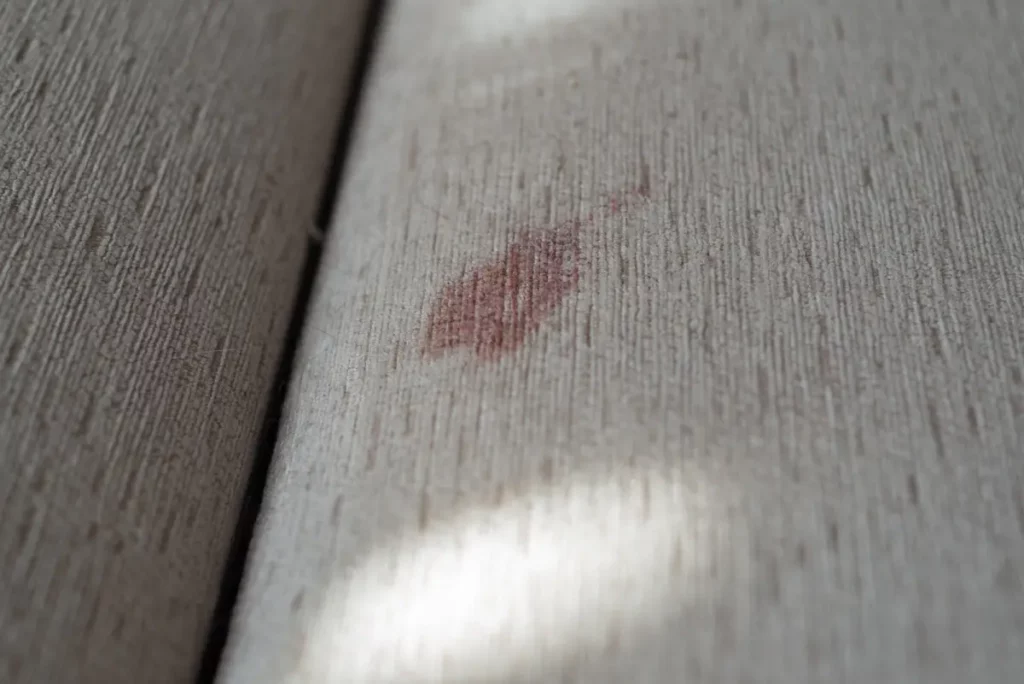
Dried blood has bonded to the fibres, so it needs loosening first and a little more patience.
- Loosen the crust. Gently scrape or brush away dried surface blood with a soft-bristled brush or the edge of a blunt knife, then vacuum the flakes.
- Use an enzyme cleaner. This is the single most effective method for dried blood. Enzyme (or “bio”) cleaners are designed to digest protein stains. Spray onto the stain, leave for 10–15 minutes per the label, then blot with a clean towel. Repeat if needed. Pet-stain removers and many bio laundry detergents contain the same enzymes.
- Or try a bicarbonate of soda paste. Mix bicarbonate of soda with a little cold water into a paste, apply to the stain, and leave for 30–40 minutes — it will turn pinkish as it draws up the blood. Brush or vacuum off, then blot with cold water.
- For light fabrics, hydrogen peroxide. Dab on a little 3% hydrogen peroxide, let it bubble for around 30 seconds, then blot. Always patch-test first, as peroxide can bleach colours.
Best Methods by Sofa Material
Different fabrics need different handling:
- Cotton and linen — durable; cold water, dish soap, or an enzyme cleaner all work well.
- Velvet and microfibre — go gentle and use minimal water; a little dish soap in cold water, blotted carefully, is safest.
- Leather — avoid soaking. Wipe with a barely-damp cloth and a mild soap solution, then apply a leather conditioner afterwards to prevent cracking.
- Suede — water can mark it; use a suede-specific cleaner or go to a professional.
- Silk and other delicates — don’t risk DIY; these need specialist cleaning.
For removable cushion covers coded W, you can pre-treat with enzyme cleaner and machine-wash on a cold, gentle cycle with detergent — but never add bleach, and always air-dry rather than tumble-dry.
Removing the Smell After the Stain
If you’re trying to get blood out of a sofa, don’t forget that even after the stain is removed, a faint metallic odour can remain. Sprinkle bicarbonate of soda over the cleaned, dry area, leave it overnight, then vacuum thoroughly. A light mist of equal parts white vinegar and cold water, left to air-dry, can also help neutralise lingering smells. Avoid heavy fragrance sprays, as they may mix unpleasantly with any remaining odour.
What to Avoid
- Hot or warm water — sets the protein permanently.
- Scrubbing — drives the stain deeper and damages fibres.
- Bleach and ammonia — can discolour or weaken upholstery.
- Coloured cloths — may transfer dye into the fabric.
- Over-wetting — soaked padding can develop mould or water stains.
When to Call a Professional To Get Blood Out of A Sofa
Some situations are best left to experts:
- The sofa is suede, velvet, silk, or coded S or X.
- The stain is large, old, or has soaked deep into the padding.
- DIY has removed the surface mark but a shadow or smell remains.
- The spill involves a significant amount of blood or other bodily fluids — these are biohazards and need safe, thorough decontamination, not just surface cleaning.
Disaster Care Capital provides professional upholstery and furniture restoration across the UK, using specialist equipment and safe, effective solutions to lift stains DIY methods can’t reach — and to properly decontaminate where bodily fluids are involved. Our furniture and clothes restoration team can help when a sofa is too valuable or too badly affected to risk.
How to Prevent Sofa Stains
- Use washable throws or slipcovers, especially with pets or children.
- Keep an upholstery-safe stain remover handy for emergencies.
- Vacuum your sofa weekly to stop dirt building up.
- Treat any spill immediately — fresh stains are far easier to remove than set-in ones.
Read also: Carpet water damage
Conclusion
Knowing how to get blood out of a sofa can save your furniture from costly replacement. The rules are simple: act fast, use cold water only, blot instead of rubbing, check your care label, and reach for an enzyme cleaner on stubborn or dried stains. If the blood won’t budge, the fabric is delicate, or the spill is large, Disaster Care Capital is here to restore your sofa safely and completely.
FAQs
Can I use vinegar to remove blood stains from my sofa?
Yes, you can mix one part white vinegar with two parts cold water and blot the stain. However, always test it first to avoid discolouration.
What if my sofa is leather?
For leather sofas, avoid water-based methods. Instead, use a leather cleaner or contact a professional upholstery cleaning company.
How long does it take for professional cleaning to remove blood stains?
Typically, a professional cleaning session lasts about 1–2 hours, depending on the fabric and stain depth.
Are blood stains permanent on fabric?
Not always. Blood stains can often be removed from fabric, especially if treated quickly with cold water and appropriate cleaning methods. Older or heat-set stains are more difficult to remove, but they are not necessarily permanent.





