


Green mould on walls is a fungal growth — usually Cladosporium, Aspergillus or Penicillium — that appears as fuzzy or slimy green patches on damp, poorly ventilated walls. It commonly grows around windows, on bathroom walls and behind furniture on cold external walls. Left untreated, it damages surfaces and can trigger coughing, wheezing and allergies.
If you’ve spotted slimy or fuzzy green mould on your walls, you’re not alone. It’s one of the most common types of mould found in British homes, especially through the damp autumn and winter months. Green mould on walls isn’t just unsightly — it can damage your property and affect your health.
So how do you tackle it? In this guide we explain what green mould is, why it appears, how to remove it safely step by step, and — most importantly — how to stop it coming back.
What Is Green Mould?
Green mould on walls is a fungal growth, most often made up of species such as Cladosporium, Aspergillus, or Penicillium. It typically appears on damp internal walls, bathroom tiles, painted surfaces, and around windows. Unlike white or black mould, green mould tends to develop in areas with ongoing dampness or slow water leaks.
Signs of green mould on walls include:
- Green or dark patches forming on the wall surface
- A persistent musty or damp smell
- Peeling, bubbling, or discoloured paint
- Damp or cold areas that never fully dry out
- A visible fuzzy or slimy texture on the affected spots
- Increased allergy symptoms such as coughing or sneezing indoors
Green Mould vs Black Mould vs White Mould
Not all mould is the same. Knowing which type you’re dealing with helps you judge the risk and the right response.
| Type | Typical colour & texture | Where it grows | Risk level |
|---|---|---|---|
| Green mould | Fuzzy or slimy, light-to-dark green | Damp walls, tile grout, around windows, behind furniture | Moderate — can affect breathing and allergies |
| Black mould | Dark, slimy, sometimes greenish-black | Persistently wet areas, bathrooms, behind leaks | Higher — linked to greater health risks |
| White mould | Fluffy, powdery, white | Cold walls, lofts, basements, soft furnishings | Moderate — often an early stage |
The colour alone doesn’t tell the whole story. Any mould covering more than about one square metre, or that keeps returning after cleaning, should be treated as a sign of a deeper moisture problem.
What Causes Green Mould on Walls?
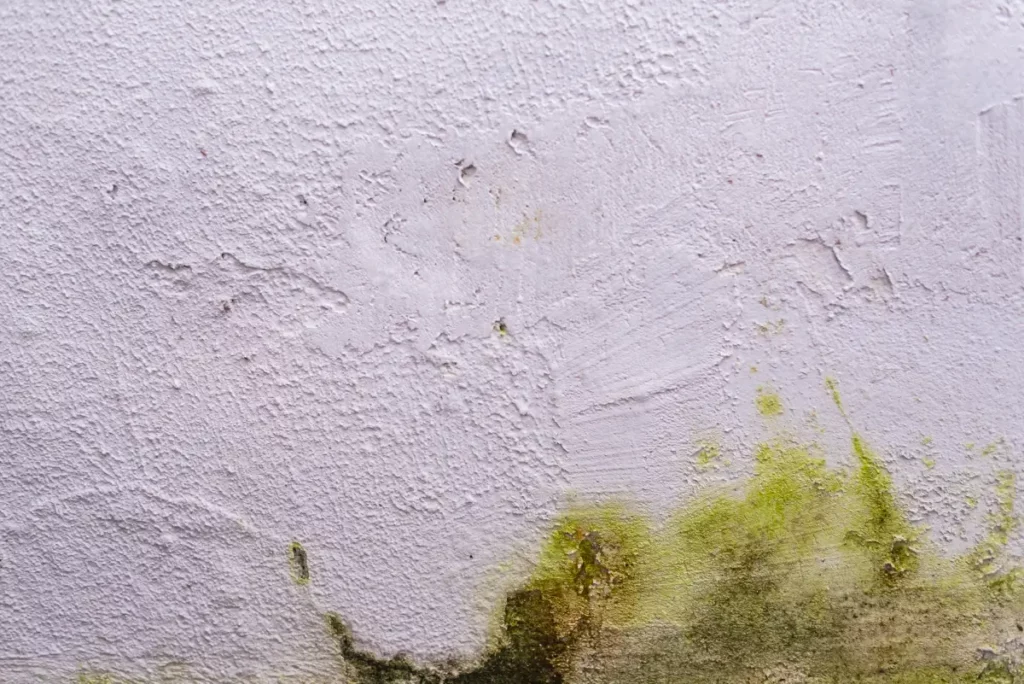
Green mould grows wherever there is moisture and poor airflow. The most common triggers in UK homes are:
- Condensation from cooking, showering, or drying clothes indoors
- Water leaks in walls, roofs, or pipework
- Rising damp or poor external drainage
- Cold spots caused by inadequate heating or insulation
- Blocked airflow behind furniture pushed against external walls
Example: Green mould often appears behind wardrobes or sofas placed against a cold external wall, where warm room air meets the cold surface, condenses, and can’t circulate away.
Read also: How to stop mould in a house
Where Green Mould Commonly Appears
- Bathroom walls and ceilings — high humidity and limited ventilation make bathrooms a hotspot.
- Around windows — condensation collects on cold glass and frames, then spreads to the surrounding wall.
- Behind wallpaper and paint — moisture trapped underneath feeds mould you can’t immediately see.
- On external-facing walls — these are colder, so condensation forms more readily.
- Behind furniture — anywhere air can’t circulate freely.
Read also: What causes mould on walls in the bedroom
Green mould grows in damp, poorly ventilated spaces. Here are the most common triggers:
- Condensation from cooking, showers or drying clothes indoors
- Water leaks in walls or ceilings
- Rising damp or poor drainage
- Inadequate heating or insulation
Example: Green mould often appears behind furniture pushed against external walls where air can’t circulate.
Read also: how to stop mould in a house
Is Green Mould on Walls Dangerous? The Health Risks
Living with green mould on walls can increase the risk of:
- Respiratory problems such as coughing, wheezing, and shortness of breath
- Aggravated asthma and more frequent asthma attacks
- Allergic reactions including sneezing, itchy eyes, and skin irritation
- Headaches and fatigue from prolonged exposure
- Infections in people with weakened immune systems
- Poorer indoor air quality, leaving the home feeling damp and stuffy
Children, older people, and anyone with a weakened immune system or existing respiratory condition are most at risk. The NHS advises that damp and mould in the home can cause or worsen respiratory problems and allergies, so it should not be ignored.
How to Remove Green Mould on Walls (Step by Step)
For small, surface-level patches, you can often treat green mould on walls yourself. Follow these steps:
- Protect yourself. Wear gloves, goggles, and a face mask to avoid breathing in or touching spores.
- Prepare the area. Open windows for airflow and cover nearby furniture or flooring with plastic sheeting.
- Clean the mould. Mix white vinegar with warm water (1:1), or use a commercial mould remover. Apply with a spray bottle or sponge, leave for a few minutes, then gently scrub. Never dry-scrub mould — it releases spores into the air.
- Rinse and dry completely. Wipe with clean water and dry the surface thoroughly, as leftover moisture invites regrowth.
- Dispose of materials safely. Bag and bin used sponges, cloths, and gloves to avoid spreading spores elsewhere.
When choosing a green mould remover, avoid using bleach on porous surfaces such as plaster — it often bleaches the surface without reaching the deep-rooted mould underneath.
Preventing Green Mould on Walls
Removing mould only lasts if you fix the moisture behind it. To keep green mould from returning:
- Use a dehumidifier to keep indoor humidity below 60%
- Ventilate well — open windows and run extractor fans in kitchens and bathrooms
- Fix leaks and plumbing issues promptly
- Improve insulation to remove cold, damp spots
- Use mould-resistant paint in moisture-prone rooms
- Avoid drying clothes indoors without ventilation
- Leave a gap between furniture and external walls to let air circulate
- Regularly check condensation-prone areas and wipe them down
Read also: Mould Removal Services
When to Call a Professional
DIY treatment is fine for small patches, but call a specialist if:
- The affected area is larger than roughly one square metre
- The mould keeps returning after cleaning
- There’s a musty smell but no visible mould (a sign of hidden growth)
- Anyone in the home has asthma, allergies, or a weakened immune system
- You suspect a leak, rising damp, or damage behind the wall
At Disaster Care Capital, our mould remediation specialists don’t just remove what you can see. We identify the underlying moisture source, contain the area to stop spores spreading, use HEPA filtration and antimicrobial treatment to kill mould at the root, and dry the space fully to prevent regrowth. If your property is affected by persistent or spreading green mould on walls, call us immediately.
FAQs on Green Mould on Walls
Is green mould harmful?
Yes, prolonged exposure can affect your lungs, especially if you have asthma or allergies.
Can I paint over green mould?
No. Mould must be removed first. Painting over it will not stop it from spreading underneath.
Why does green mould keep coming back?
Persistent moisture is usually the culprit. Use a dehumidifier and improve airflow.
How fast does green mould grow?
It can start growing within 24–48 hours in the right conditions.
Will a dehumidifier get rid of green mould?
It won’t remove it, but it helps stop new growth by reducing moisture levels.
How to treat green mould on walls?
Clean the affected area with a mould remover or diluted bleach, improve ventilation, fix any moisture sources, and ensure the wall is fully dried to prevent regrowth.
Is green mould dangerous?
Yes, green mould can be harmful, especially if it spreads indoors. It may trigger allergies, respiratory irritation, and asthma symptoms, particularly for children, elderly people, or those with weakened immune systems.
How to treat green mould on walls?
To treat green mould on walls, clean the affected area with a mould remover or a vinegar solution, scrub gently, allow the wall to dry completely, and improve ventilation to prevent it from returning.
What is the difference between Green mould vs black mould?
Green mould is usually lighter in colour and commonly grows on damp surfaces, while black mould is darker and often linked to higher toxicity and greater health risks.





