


Spotting green mould on skirting boards is more than just an unsightly nuisance—it’s often a sign of dampness and poor ventilation in your home. Many homeowners in the UK, especially in older properties, notice mould growth at the bottom of walls where condensation and rising damp are most common.
This guide explains why green mould appears on skirting boards, the health and property risks it brings, and the safest ways to remove it. We’ll also cover when DIY methods work and when to call in professional mould remediation services like Disaster Care Capital.
What Is the Green Mould on My Skirting Boards?
Green mould on skirting boards is a fungal growth — commonly Aspergillus, Penicillium, or Trichoderma — that appears as a velvety or powdery coating ranging from sage to deep emerald green. It needs just three things to thrive: moisture, organic material to feed on (wood, paint, dust), and still, poorly ventilated air. Skirting boards tick every box, which is why mould often appears there even when the wall above looks clean. Under the right damp conditions, it can colonise a surface in as little as 24–48 hours.
Why Does Green Mould Grow on Skirting Boards?
Skirting sits at the junction between wall and floor — a cold spot where chilly air from an external wall meets warm indoor air, causing condensation to form and settle. Because skirting is usually made of wood or MDF, it soaks up that moisture readily. Common causes of green mould on skirting boards include:
- Condensation collecting at the base of cold external walls.
- Rising damp drawing moisture up through ground floors.
- Penetrating damp or leaking pipes behind walls and under floors.
- Cold bridging and poor insulation, which create cold surfaces where condensation forms.
- Furniture pushed against external walls, trapping moist, stagnant air.
- Newly installed skirting fitted before fresh plaster or floors had fully dried, or boards that weren’t sealed or primed.
- Blocked air vents and generally poor airflow.
Read also: What causes mould on walls in the bedroom
Is Green Mould on Skirting Boards Dangerous?
Yes — Green Mould on Skirting Boards should be dealt with promptly, and green mould is no exception. It releases spores that can trigger allergic reactions, coughing, sneezing, skin irritation, and worsened asthma, with children, elderly people, and anyone with a respiratory condition or weakened immune system most at risk. Beyond health, mould feeds on the organic material in wood, paint, and wallpaper, so left untreated it can rot and warp skirting, spread to carpets, walls, and furniture, and leave a persistent musty smell. The NHS warns that damp and mould in the home can cause significant health problems, which is why early action matters.
Read also: Can black mould make you sick?
How to Remove Green Mould on Skirting Boards (Step by Step)
For small, surface-level patches on sealed or painted skirting, you can usually treat it yourself. Anything larger, recurring, or on bare/rotten wood needs professional help (see below).
- Protect yourself and the room. Wear gloves and an FFP2 mask, open a window, and lay down a dust sheet. Mould spores become airborne easily.
- Don’t dry-scrub. Scrubbing dry mould flings spores around the room. Always dampen it first.
- Apply your cleaning solution. Spray the area with white vinegar (a natural antifungal) or a fabric-safe mould remover and leave it for 30–60 minutes. For a gentler, pet- and child-safe option, use a paste of two parts baking soda to one part white vinegar.
- Wipe and gently scrub. Work the area with a soft cloth or brush, then wipe clean. Repeat if needed.
- Dry the area completely. This is the most important step — any lingering moisture invites the mould straight back. Use a dry cloth and let the area air out fully.
- Reseal or repaint. Once dry, finish painted or sealed skirting with a mould-resistant primer or anti-mould paint to help stop regrowth.
When DIY Isn’t Enough: Signs of a Deeper Problem
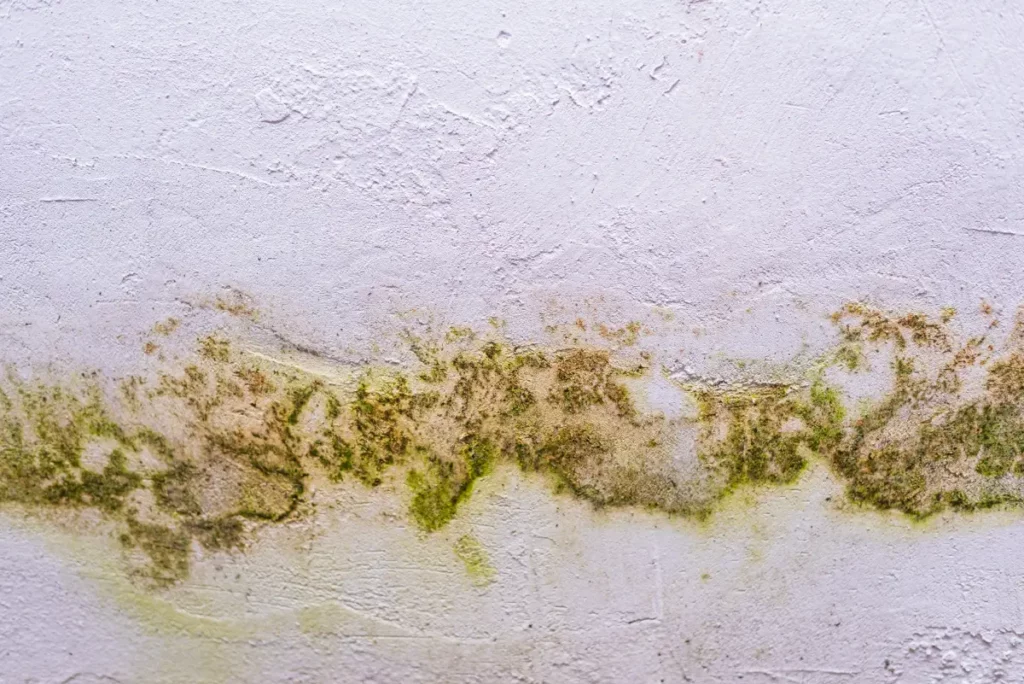
Surface cleaning only treats the symptom. These signs mean the mould goes deeper and needs professional attention:
- A persistent musty smell even when nothing is visible.
- Peeling paint or wallpaper near the skirting.
- Soft, spongy, or crumbling wood when pressed.
- Damp patches on the wall above the skirting.
- Mould that keeps returning after cleaning.
Professional Removal of Green Mould on Skirting Boards
For long-term solutions, professional mould remediation is essential. At Disaster Care Capital, our process includes:
- Inspection – Identifying hidden moisture sources.
- Containment – Stopping spores spreading during cleaning.
- HEPA Filtration – Removing mould spores from the air.
- Antimicrobial Treatment – Killing mould at its roots.
- Repair & Restoration – Replacing damaged skirting boards if necessary.
- Prevention Advice – Ventilation, dehumidifiers, and waterproofing tips.
Read more on- NHS – Health Effects of Mould Exposure.
How to Prevent Green Mould on Skirting Boards
Prevention comes down to controlling moisture and keeping air moving:
- Keep indoor humidity below 50–60% using a dehumidifier, especially in winter.
- Improve ventilation — run extractor fans while cooking and showering (and for 20 minutes after), and open windows regularly.
- Move furniture away from external walls, leaving a 4–6 inch gap so air can circulate.
- Fix leaks and damp quickly — check pipes, radiators, roofs, and window seals, and watch for early signs like swollen skirting or peeling paint.
- Insulate cold walls and floors to reduce the cold spots where condensation forms.
- Seal and prime new skirting before decorating, and let fresh plaster and floors dry fully before fitting.
- Apply anti-mould or anti-condensation paint on vulnerable skirting for extra protection.
Real Case Example: A Southampton Homeowner
A homeowner in Southampton noticed green mould on their skirting boards in the living room. They tried scrubbing it with household sprays, but the mould kept coming back.
When we inspected, we discovered rising damp from old brickwork and condensation due to poor ventilation. After treating the damp, replacing damaged skirting, and applying antimicrobial solutions, the problem was fully resolved.
When to Call Disaster Care Capital
If green mould keeps returning, covers a large area, comes with damp patches or a musty smell, or the wood has started to soften or rot, the damp behind it needs professional diagnosis. Disaster Care Capital helps UK homeowners, tenants, and landlords find and fix the root cause. Our mould remediation service, dehumidifier hire, and full moisture surveys treat the source so both the mould and the damp stay gone.
Conclusion
Finding green mould on skirting boards is a warning sign of damp in your home. While quick DIY cleaning may provide temporary relief, mould will continue to return unless the root cause—such as leaks, condensation, or rising damp—is fixed.
For lasting results, it’s best to rely on professional mould remediation services like Disaster Care Capital, ensuring both your home and health are protected.
Contact us today for a full mould inspection and safe removal.
FAQs
Is green mould dangerous?
Yes, green mould produces spores that can cause health problems, especially for children and people with asthma.
Can I just paint over mould on skirting boards?
No. Painting over mould only hides it temporarily—the spores will eventually bleed through.
Will replacing the skirting boards get rid of mould?
Not always. If the damp problem isn’t fixed first, the new skirting boards will also develop mould.
What causes green mould on skirting boards?
Green mould on skirting boards is usually caused by excess moisture, poor ventilation, condensation, leaks, damp walls, wet floors, or furniture blocking airflow, which allows the area to stay damp long enough for mould to grow.
How to treat green mould on skirting boards?
Treat green mould on skirting boards by fixing the moisture source first, then clean the area with a mould remover or suitable biocide, dry it fully, improve ventilation, and avoid blocking airflow with furniture. If the wood is soft, rotten, or the mould keeps returning, the skirting may need professional treatment or replacement.





