


When fire damages a rental property, the landlord’s obligations begin immediately, not after the insurance claim is settled, not after the loss adjuster has visited, and not after the tenant has made contact. The obligation to act arises from the moment the damage occurs, and the law on what landlords must do is clear.
This is an area where confusion is common and costly. Landlords sometimes assume that the insurance process drives the reinstatement timeline, or that the tenant’s ongoing rent obligation depends on whether the damage was their fault. Neither is correct. Understanding the legal framework, the insurance position, and the practical sequence of a fire damage restoration in a rental property is what allows landlords to respond appropriately, and to avoid the disrepair liability, rent disputes, and regulatory exposure that result from getting it wrong.
The Landlord’s Legal Obligation After Fire Damage
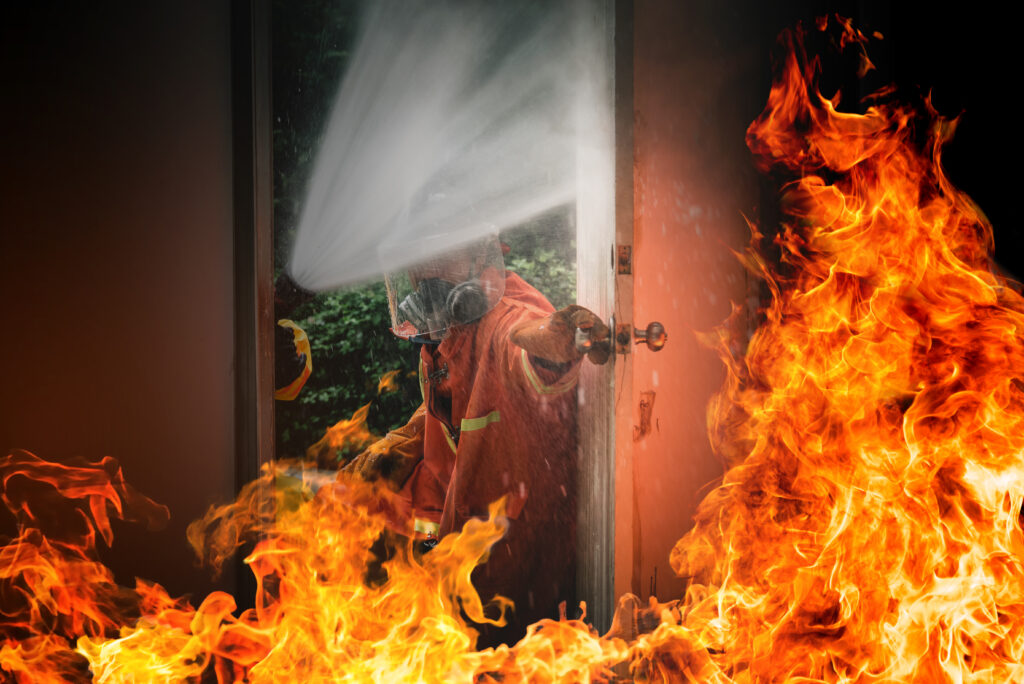
The core obligation comes from Section 11 of the Landlord and Tenant Act 1985, which requires landlords to keep the structure and exterior of the property in repair and to maintain installations for services in proper working order. This obligation is not contingent on whether the fire was the tenant’s fault, the landlord’s fault, or caused by an unrelated third party. Fire damage to the structure, walls, roof, floors, windows, electrics, heating, falls within the landlord’s statutory repair obligation.
Additionally, the Homes (Fitness for Human Habitation) Act 2018 requires the property to be fit for human habitation throughout the tenancy. A property that has suffered significant fire damage will almost certainly fail this standard and must be made fit again.
The practical consequence: once a fire has damaged the structure or services of a rental property, the landlord is legally obliged to restore it to a habitable standard, regardless of how the fire started.
What Happens to the Tenancy When Fire Makes the Property Uninhabitable
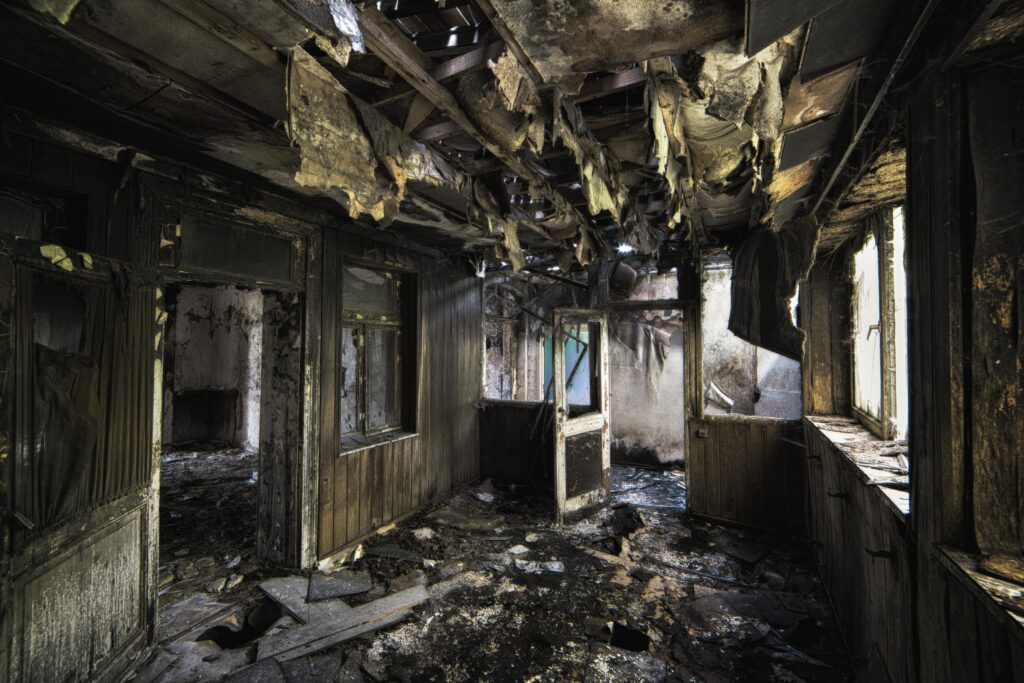
This is the question most landlords are uncertain about, and the answer depends on whether the damage renders the property fully or partially uninhabitable.
If the property is fully uninhabitable, if the tenant cannot reasonably live there, the tenancy does not automatically end. The tenant retains their tenancy rights. They are not legally required to continue paying rent for a property they cannot live in, though the precise position depends on the lease terms and whether the rent cesser (suspension of rent) clause applies. Most well-drafted tenancy agreements include a rent cesser clause that suspends rent if the property becomes uninhabitable through an insured risk, check the tenancy agreement for this provision.
The tenancy can only be ended through the standard legal process: a landlord cannot use fire damage as a reason to terminate a tenancy outside the grounds available under the Housing Act 1988 and, from 1 May 2026, the Renters’ Rights Act 2025. Section 21 no-fault evictions have been abolished from this date.
If the property is partially damaged, if some rooms are uninhabitable but the tenant can continue to occupy part of the property, the rent may be apportioned, again subject to the tenancy agreement terms.
In both situations, clear and prompt communication with the tenant about the reinstatement timeline, their rights, and what alternative accommodation arrangements are being made is both legally good practice and practically important for maintaining the tenancy relationship through a stressful period.
Read also- Mould in a rented property, can a tenant withhold rent?
Does the Landlord’s Insurance Cover Full Reinstatement?
Landlord buildings insurance is designed to cover the cost of reinstating the property to its pre-loss condition following damage from insured perils, including fire. If the insurance is in place and the fire is caused by an insured peril, which most fire events are, the insurer will appoint a loss adjuster, agree a scope of reinstatement, and fund the works.
The key insurance points for landlords are:
The policy covers the building, not the tenant’s contents. The tenant is responsible for insuring their own possessions. Landlord buildings insurance covers the structure, fixed fixtures, and fittings, not the tenant’s furniture, appliances, or personal property.
Loss of rent coverage. Most landlord insurance policies include loss of rent cover, which compensates the landlord for rental income lost while the property is uninhabitable and under reinstatement. The duration and cap on this coverage varies by policy, check this specifically, as the reinstatement timeline following a significant fire can extend to several months.
Whether the fire was caused by the tenant. If the fire resulted from the tenant’s negligence or deliberate act, the insurer may pursue the tenant for recovery of the claim cost through the principle of subrogation. However, this is a matter between the insurer and the tenant, it does not alter the landlord’s obligation to reinstate the property or the tenant’s right to continued tenancy during that period.
Notify the insurer immediately. A landlord who delays notification, begins demolition or clearance before the loss adjuster’s visit, or fails to take reasonable steps to prevent further damage may find the insurer reduces the settlement. Call your insurer on the same day.
Read also- Signs of a hidden water leak in your home
Smoke and Soot Damage, Why Surface Cleaning Is Not Sufficient
One of the most common errors in fire damage restoration is treating smoke and soot damage as a cleaning problem rather than a structural remediation problem. This matters particularly in rental properties where the landlord’s obligation is to restore the property to its pre-loss habitable standard, not simply to make it look superficially clean.
Smoke particles are microscopic and penetrate porous materials at depth, plasterboard, timber, plaster, insulation, and soft furnishings absorb smoke at a molecular level. A professional deep clean of the visible surfaces leaves smoke contamination within the material substrate that produces persistent odour, staining bleed-through on redecoration, and ongoing health effects from airborne particulates.
The correct professional sequence for smoke and soot remediation is:
- HEPA vacuuming of all surfaces to remove particulate matter before any wet treatment
- Professional-grade chemical sponge cleaning or specialist cleaning agents for different surface types
- Sealing of smoke-affected substrates before redecoration to prevent bleed-through
- Thermal fogging or ozone treatment for smoke odour elimination within the building fabric
- HEPA air scrubbing during and after treatment to reduce airborne particulate counts
A property where only visible surfaces have been cleaned will typically fail a basic inspection, and a tenant who returns to a property still carrying persistent smoke odour has a legitimate complaint that goes to the habitability standard the landlord is legally required to maintain.
For landlord obligations under Section 11 and the Homes Act 2018, check: Shelter, landlord repair obligations
What BDMA-Certified Fire Restoration Provides
For landlords, the distinction between a general builder carrying out fire reinstatement and a BDMA-accredited fire restoration company matters on two specific dimensions.
Documentation. A BDMA-accredited restoration company produces a professional assessment report confirming the extent of the damage, the treatment carried out, the drying programme monitoring data, and a post-treatment confirmation that the property has been restored to the appropriate standard. This documentation is what loss adjusters accept without dispute, what resolves rent cesser disputes with tenants, and what protects the landlord against future disrepair claims relating to the fire event.
Technical standard. BDMA-accredited technicians carry out smoke, soot, and water damage remediation to the standard required for the property to be genuinely fit for reoccupation, not superficially cleaned. A landlord who reinstates a property using unqualified contractors who produce no documentation, and whose tenant subsequently develops respiratory symptoms or discovers smoke odour and staining bleed-through within months, has both a disrepair liability and a fitness for habitation problem.
Disaster Care Capital provides BDMA-certified fire and smoke restoration for rental properties across London, coordinating directly with landlord insurers and loss adjusters, managing the tenant communication process where required, and producing the full documentation chain from first assessment to reinstatement completion. Call us today.
For guidance on landlord insurance and loss of rent coverage, check: ABI, landlord insurance guidance
Conclusion
Fire damage to a rental property triggers immediate landlord obligations that are not contingent on insurance settlement, loss adjuster visits, or questions of fault. The obligation to reinstate the property to a habitable standard arises from the moment the damage occurs. The tenancy continues until ended through a lawful process, and the tenant’s rent obligation is suspended under most standard tenancy agreements while the property is uninhabitable.
Professional BDMA-certified fire restoration, with documented assessment, professional smoke remediation, and post-treatment confirmation, is both the standard required for genuine habitability and the evidential chain that protects the landlord against subsequent disrepair claims. Getting the reinstatement right from the start is substantially cheaper and less disruptive than discovering the consequences of getting it wrong.
Frequently Asked Questions
Can a tenant withhold rent if their rented home is damaged by fire?
Most well-drafted tenancy agreements include a rent cesser clause that suspends the tenant’s rent obligation if the property becomes uninhabitable through an insured risk such as fire. The tenancy itself continues, it does not end automatically due to fire damage, and the rent suspension typically applies from the date the property becomes uninhabitable until it is reinstated.
Does landlord insurance cover fire damage caused by a tenant?
Yes, most landlord buildings insurance policies cover fire damage regardless of cause. The insurer may subsequently seek to recover the claim cost from the tenant if the fire resulted from the tenant’s negligence, but this does not affect the landlord’s initial entitlement to make the claim and fund reinstatement through the policy.
How long does fire damage restoration take in a rental property?
It depends on the extent of the damage. A fire affecting one room with limited smoke spread may be restored within three to six weeks. A significant fire affecting multiple rooms and requiring structural work, full smoke remediation, and complete redecoration can take three to six months or longer. Loss of rent insurance coverage duration should be checked against a realistic reinstatement timeline before any works are agreed.





