


Basements are the most challenging spaces to dehumidify in any UK property. They sit below grade, surrounded on multiple faces by ground that holds and transmits moisture continuously. Their walls and floors are typically concrete, masonry, or stone, dense materials that absorb moisture slowly and release it slowly. Their ambient temperature is often significantly lower than the rest of the property, particularly in autumn and winter. And in many cases, they face not just absorbed fabric moisture but ongoing groundwater migration through the structure.
Placing a standard domestic dehumidifier in a basement and expecting it to solve a moisture problem is the most common and most expensive mistake people make. This guide explains why basements need a different approach, what equipment actually works, and the point at which a damp inspection rather than more equipment is what the situation requires.
Why Basements Are Harder to Dehumidify Than Above-Ground Rooms
Three characteristics make basements fundamentally different from the rooms above them when it comes to moisture management.
Cold Temperatures: A basement that sits below 15°C—which describes most UK basements from October through April and many throughout the year—is outside the operating range where standard refrigerant dehumidifiers perform effectively. Refrigerant units work by cooling air below its dew point to condense moisture out. Below approximately 15°C, their extraction rate drops sharply. Below 10°C, many ice up and stop functioning entirely. A standard domestic dehumidifier running in a cold UK basement may extract almost nothing while its display indicates that it is operating.
Continuous Moisture from the Ground: In an above-ground room, a moisture event, a leak, a flood, introduces a finite amount of water into the fabric. Once the source is stopped, the dehumidifier is extracting a declining total amount of moisture. In a basement, the ground surrounding the structure is a continuous moisture source. Moisture migrates through masonry walls and concrete floor slabs by capillary action regardless of the season. The dehumidifier is working against a continuous incoming moisture load, not a finite one.
Dense Materials: Concrete, brick, and stone release moisture far more slowly than plasterboard or timber. A concrete floor slab that has been wet for an extended period can hold moisture for months, even with professional drying equipment running. The drying programme must be sustained over a longer period than any equivalent above-ground scenario.
Read also: How to make a flood damage insurance claim UK, step by step
The Right Equipment for Basement Dehumidification
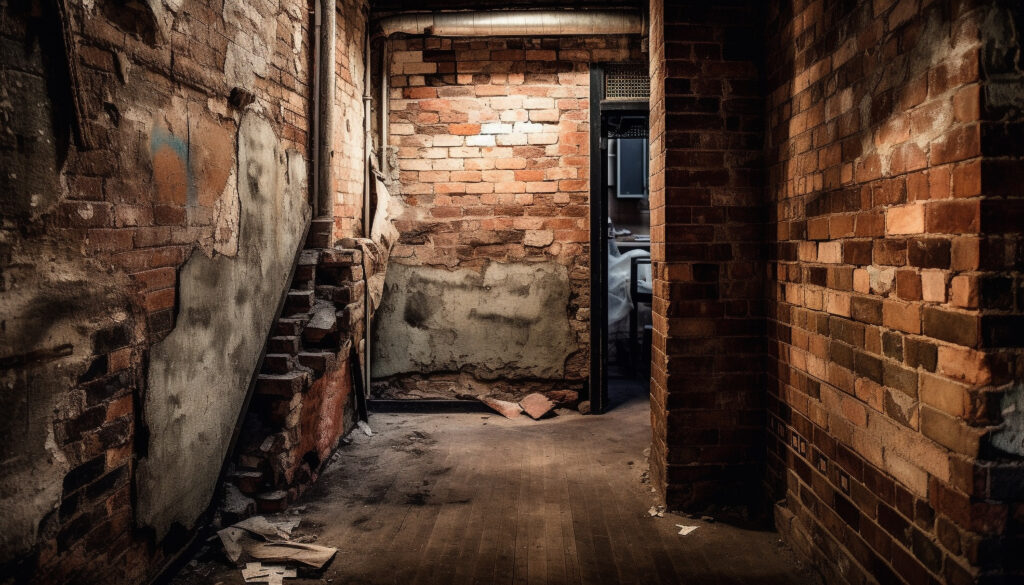
Industrial Desiccant Dehumidifiers are the correct primary equipment for basement dehumidification in the UK. Unlike refrigerant units, desiccant dehumidifiers use a silica gel rotor to absorb moisture directly from air, a mechanism that operates at full efficiency at any temperature, including below zero. A well-specified industrial desiccant unit extracts 20 to 50 litres per day regardless of whether the basement is at 5°C or 20°C.
The warm, dry output air that desiccant units produce also assists in warming basement surfaces, which raises surface temperatures above the dew point and reduces condensation on walls and floors. This is a secondary benefit that refrigerant units do not provide.
High-Velocity Air Movers work alongside the dehumidifier to circulate air across wall and floor surfaces. Moisture evaporates most efficiently when the saturated boundary layer, the thin layer of humid air immediately adjacent to a wet surface, is continuously displaced. Air movers directed across floor and wall surfaces can reduce total drying time by 30 to 50% compared to using a dehumidifier alone.
Injection Drying Systems address moisture that surface equipment cannot reach. Basement moisture is often not just at the surface; it is within wall cavities, inside blockwork, and deep within concrete floor slabs. Injection drying delivers desiccant-dried air directly into these inaccessible voids through insertion rods, drying the concealed fabric that surface equipment cannot access. For significant basement moisture events, injection drying is often the intervention that closes the gap between surface readings appearing acceptable and the underlying fabric still carrying elevated moisture.
Read also: Is Mould in a Rented Flat the Landlord’s Responsibility? Practical Guide for London Tenants
The Most Common Dehumidification Mistakes in Basements
Using a Domestic Refrigerant Unit in a Cold Basement: The extraction rate at temperatures below 15°C is negligible for most domestic units. This is the single most common reason people report that their dehumidifier “isn’t making any difference”; it is not making any difference because it is the wrong equipment for the temperature conditions.
Ventilating with Warm, Humid Summer Air: The instinct to open basement windows in summer to allow drying is counterproductive. Warm summer air carries more absolute moisture than the cooler air in the basement. When warm, humid external air enters the basement and contacts cold walls and floors, it deposits moisture through condensation rather than assisting drying. Basement dehumidification requires a sealed environment with the equipment managing a defined air volume.
Running Equipment Intermittently: Moisture reabsorbs overnight when equipment stops. A dehumidifier running on a timer for eight hours per day produces substantially less progress than one running continuously, because the moisture extracted during operation is partially replaced during the rest period. For significant basement moisture problems, continuous operation is required.
Stopping the Programme Based on Surface Feel or Appearance: Concrete and masonry surfaces can feel and appear dry while carrying significantly elevated moisture at depth. A calibrated moisture metre at multiple points, including with extended pins for deeper readings, and a humidity probe test for floors confirm actual dryness rather than surface impression.
For guidance on basement waterproofing standards (BS 8102), check: Property Care Association, basement waterproofing
When Professional Assessment Comes Before Equipment
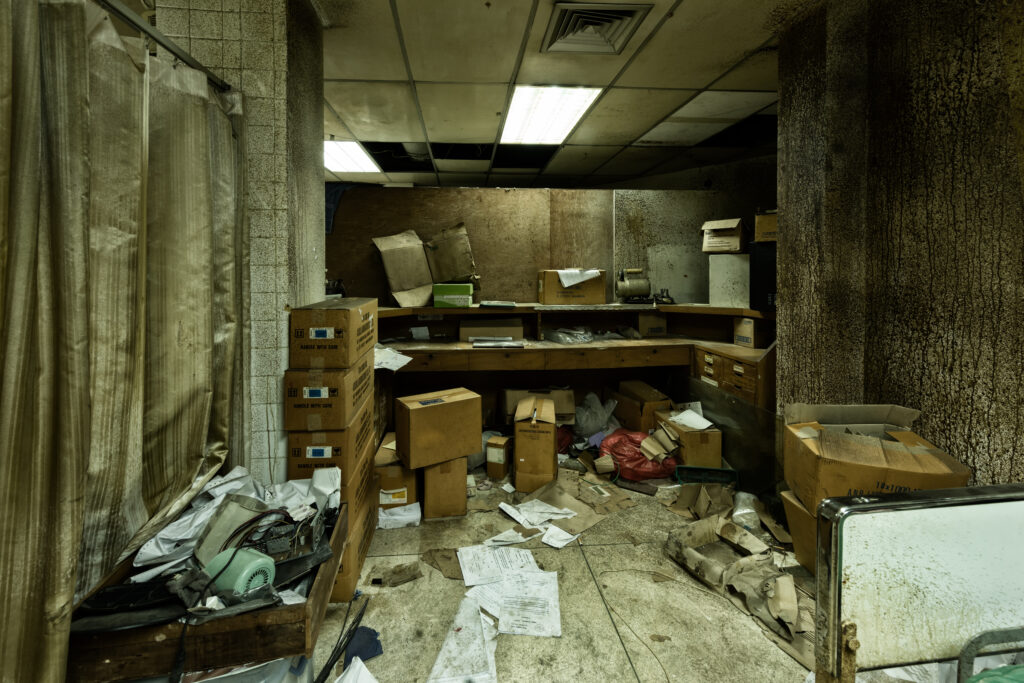
There is a point at which deploying more equipment is the wrong response to a basement moisture problem. If any of the following apply, professional damp assessment should precede any dehumidification programme.
Persistent High Readings Despite Extended Dehumidification: If a basement has been dehumidified with appropriate equipment for an extended period and moisture metre readings remain consistently elevated, the source has not been addressed. More equipment will not resolve a structural problem that is continuously introducing moisture into the space.
Rising Damp from Below the Floor Slab: Where groundwater pressure is significant, moisture migrates upward through the floor slab under hydraulic head. This is a structural waterproofing problem that requires a Type A or Type C solution, internal drainage channels, a sump pump, or a tanking system, rather than dehumidification alone. Dehumidification manages the ambient conditions but cannot address the mechanism.
Visible Structural Water Ingress: Water tracking in through cracks in the wall, flowing in around service penetrations, or pooling on the floor during wet weather indicates active structural ingress that requires waterproofing rather than drying.
Mould Within the Fabric: Where mould is established within wall finishes, timber elements, or stored contents, professional mould assessment and treatment is required alongside the drying programme. Dehumidification prevents new mould growth but does not kill established colonies.
Preparation for Reinstatement or Insulation Works: Before any internal works are carried out in a basement—such as plastering, dry-lining, or installing insulation—professional confirmation of the dry standard is required. This means calibrated moisture metre readings at a systematic grid of points, returned to the dry standard and confirmed stable. A drying certificate from a BDMA-accredited restoration company is the document that supports insurance reinstatement authorisation and protects against future disputes about whether the substrate was adequately dry.
Disaster Care Capital provides BDMA-certified basement moisture surveys and professional drying programmes across London. We deploy industrial desiccant equipment, run injection drying systems for concealed voids, monitor daily, and produce the insurer-grade documentation that confirms when the dry standard has been achieved. Call us today for a free same-day assessment.
Conclusion
Dehumidifying a basement effectively requires understanding why basements are different: colder temperatures, continuous moisture from surrounding ground, and dense materials that release moisture slowly. The correct equipment is an industrial desiccant dehumidifier, not a domestic refrigerant unit. The space must be sealed. The programme must run continuously. And when persistent moisture readings, structural ingress, or mould indicate a source that equipment alone cannot address, professional assessment is the appropriate next step before more equipment is deployed.
Frequently Asked Questions
What Is the Best Type of Dehumidifier for a Basement?
An industrial desiccant dehumidifier is the correct choice for UK basements. Refrigerant dehumidifiers lose efficiency rapidly below 15°C and can ice up in cold conditions. Desiccant units maintain full extraction performance at any temperature, including well below zero, making them the only reliably effective option for cold below-grade environments.
How Long Does It Take to Dehumidify a Basement?
With industrial desiccant equipment running continuously in a sealed space, a minor moisture event affecting concrete floors typically takes 2 to 4 weeks to reach acceptable levels. Significant flooding or long-term elevated moisture in solid masonry basement walls typically takes 6 to 12 weeks. Without professional equipment, these timescales roughly double or treble.
Should I Open Windows in My Basement When Dehumidifying It?
No, keep all windows and external doors closed when a dehumidifier is running. External air in summer is often more humid in absolute terms than the air inside the basement, and introducing it deposits moisture through condensation on cold basement surfaces. The dehumidifier manages the sealed air volume of the space most effectively when the space is closed.
When Should I Call a Professional about Basement Moisture?
If moisture metre readings remain elevated despite extended dehumidification with appropriate equipment, if water is actively tracking through the structure, if there is visible mould, or if the basement needs professional confirmation of dryness before reinstatement works, professional assessment is needed. Deploying more equipment against an unresolved structural moisture source produces cost without progress.





