


When summer arrives and your home feels heavy, sticky, and uncomfortable, you might ask yourself: does a dehumidifier help with the heat?
It’s a common question — especially here in the UK where we don’t always install full air conditioning systems. Many homeowners notice that even when temperatures aren’t extreme, their homes still feel suffocating.
The answer is yes — but not in the way most people expect.
A dehumidifier does not lower the actual air temperature like an air conditioner. However, it removes excess moisture from the air, which significantly improves how cool and comfortable a space feels.
At Disaster Care Capital, we regularly help property owners manage damp, condensation, mould risks, and post-flood moisture issues. Understanding how humidity interacts with heat can protect both your comfort and your property.
Check also our Dehumidifier Hire Services
Why Heat Feels Worse in Humid Homes

Before answering whether a dehumidifier helps with the summer heat, you need to understand why humidity makes warmth feel unbearable.
When humidity levels rise:
- Sweat does not evaporate efficiently
- The air feels heavier
- Rooms feel stuffy
- Sleep becomes uncomfortable
- Condensation increases
The human body cools itself through evaporation. When the air already holds too much moisture, sweat cannot evaporate properly. That’s why 24°C on a humid day feels far worse than 28°C on a dry one.
According to guidance from the Met Office, relative humidity levels above 60% significantly increase perceived temperature and discomfort.
So while a dehumidifier does not “cool” air in the traditional sense, it makes heat far more tolerable by lowering moisture content.
How a Dehumidifier Actually Works
To properly answer this question, let’s look at the mechanism.
A refrigerant dehumidifier:
- Draws in moist air
- Cools it internally
- Condenses moisture into water
- Releases drier air back into the room
This process reduces humidity levels, usually targeting an ideal indoor relative humidity of 40–60%.
The Energy Saving Trust explains that managing humidity improves comfort and helps heating and cooling systems operate more efficiently. For more info check: https://energysavingtrust.org.uk
So, Does a Dehumidifier Help With Heat in Practical Terms?
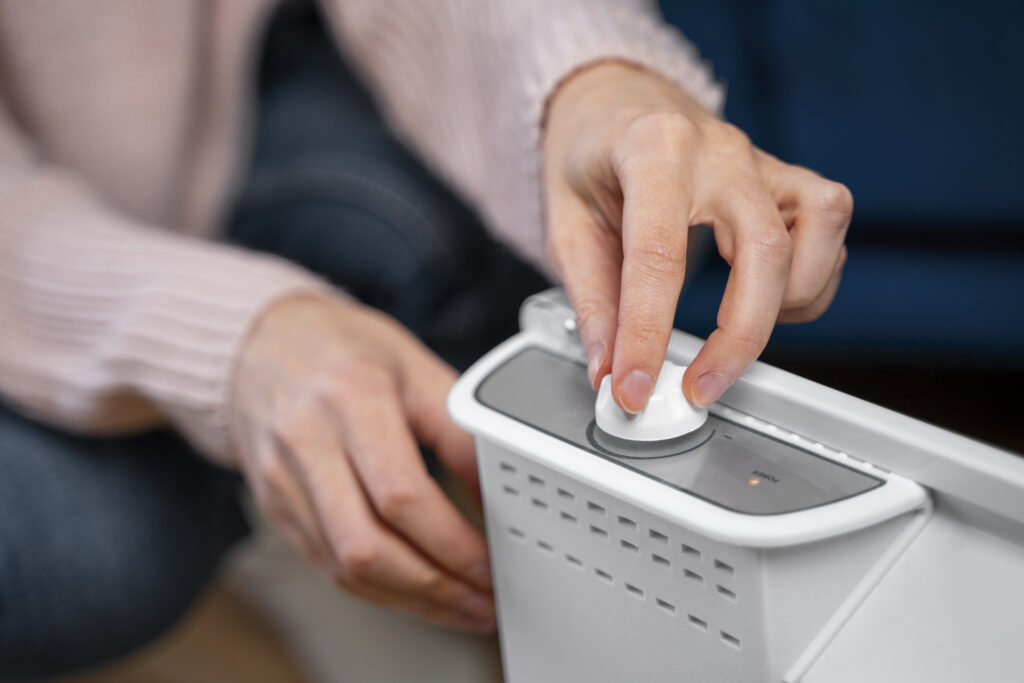
Yes — because it changes how heat feels.
Here’s what you’ll notice:
1. Rooms Feel Lighter
Air no longer feels thick or oppressive.
2. Sweating Reduces
Your body cools itself more effectively.
3. Sleep Improves
Bedrooms feel fresher at night.
4. Windows Stop Condensing
Reduced humidity prevents moisture build-up.
5. Mould Risk Drops
Warm, damp conditions encourage mould growth. Removing moisture limits that risk.
Many of our clients contact Disaster Care Capital asking whether a dehumidifier will fix a “hot room” problem. In reality, it fixes a humidity problem that’s amplifying the heat.
You can also check our Professional Mould Remediation
Real Example: Loft Conversion Overheating
A Barnet homeowner converted their loft into a bedroom. During warm weather, the space felt unbearable despite moderate outdoor temperatures.
They assumed insulation caused overheating. In reality, poor ventilation allowed humidity to build up from showers and cooking below.
After installing a correctly sized dehumidifier and improving airflow, the room felt noticeably cooler — without installing air conditioning.
This example clearly answers the question: does a dehumidifier help with heat? Yes, when humidity is the hidden issue.
When a Dehumidifier Will Not Solve the Problem
It’s important to be honest.
A dehumidifier will not:
- Replace air conditioning
- Reduce the room’s temperature significantly
- Fix structural insulation issues
- Solve solar heat gain from large windows
If direct sunlight overheats your property, shading or ventilation improvements may be required.
However, in the UK climate — where humidity often exceeds comfort levels — dehumidifiers significantly improve liveability.
The Link Between Heat, Humidity and Mould
Warmth plus moisture equals mould growth.
During summer, many homeowners believe mould only appears in winter. That’s incorrect. High humidity in warm weather creates ideal mould conditions.
The NHS warns that prolonged mould exposure can worsen respiratory conditions and allergies. For more info check: https://www.nhs.uk/conditions/mould-health-risks/
When people ask if a dehumidifier helps with the heat, the better question may be: does it protect my health and property? The answer is absolutely.
Dehumidifiers After Flood or Leak Damage
At Disaster Care Capital, we frequently use industrial dehumidifiers after:
- Burst pipes
- Drain overflows
- Roof leaks
- Storm damage
After water intrusion, moisture remains trapped in walls and floors long after surfaces appear dry.
In these cases, a dehumidifier does more than improve comfort. It prevents:
- Structural timber rot
- Plaster deterioration
- Persistent damp smells
- Secondary mould outbreaks
So yes, a dehumidifier helps with heat — but more importantly, it protects property integrity.
Disaster Care Capital also provides flood restoration service that goes beyond surface drying to remove trapped moisture completely.
Ideal Humidity Levels for UK Homes
For comfort and health:
- 30–40%: Slightly dry but comfortable
- 40–60%: the ideal range
- 60–70%: a risk of condensation
- Above 70%: a high risk of mould
Many UK homes exceed 65% during warm months, especially in kitchens and bathrooms.
If your home feels hotter than outdoor temperatures, high humidity is often responsible.
Energy Efficiency and Cost Considerations
Another reason homeowners ask whether a dehumidifier helps with heat is energy efficiency.
Lower humidity allows fans and ventilation systems to work more effectively. You may feel comfortable at a slightly higher temperature setting.
Modern domestic dehumidifiers consume far less electricity than full air conditioning systems, making them a practical solution in Britain’s moderate climate.
Signs Your Home Has Excess Humidity
Look for:
- Persistent condensation
- Musty smells
- Damp patches
- Peeling wallpaper
- Warped wood
- Heavy indoor air
If these symptoms appear during warm weather, installing a dehumidifier may significantly improve comfort.
Choosing the Right Dehumidifier
Not all units perform equally.
You must consider:
- Room size
- Moisture levels
- Extraction rate (litres per day)
- Noise levels
- Continuous drainage options
If you’ve experienced water damage, professional-grade equipment may be necessary rather than a small domestic unit.
At Disaster Care Capital, we assess moisture levels scientifically rather than guessing.
Read also- Can Dehumidifiers Help in Restoration
The Psychological Impact of Humid Heat
High humidity does more than cause discomfort. It affects concentration, sleep, and mood.
Many clients report feeling lethargic during humid spells. Once moisture levels drop, productivity improves noticeably.
So when asking “does a dehumidifier help with heat?”, consider the wider lifestyle benefits.
Combining Dehumidifiers With Other Cooling Methods
For best results:
- Use blinds during peak sun
- Improve cross-ventilation
- Install extractor fans
- Seal leaks
- Maintain roof integrity
A dehumidifier works best as part of an integrated moisture management strategy.
Read also- how does a dehumidifier work for damp
Conclusion: Does a Dehumidifier Help With Heat?
Yes — particularly in the UK climate where humidity often makes moderate temperatures feel oppressive.
While a dehumidifier does not actively cool air like an air conditioner, it reduces moisture levels, improves comfort, lowers mould risk, and protects your property.
If your home feels stuffy, damp, or unusually warm, the issue may not be temperature — it may be humidity.
At Disaster Care Capital, we help homeowners identify and resolve hidden moisture problems properly. If you’re wondering, “does a dehumidifier help with heat?”, speak to our team for expert advice tailored to your property.
FAQs
1. Does a dehumidifier lower room temperature?
Not directly. It reduces humidity, which makes heat feel less intense and improves comfort.
2. Can I use a dehumidifier instead of air conditioning?
In the UK climate, yes in many cases. If humidity causes discomfort, a dehumidifier may be sufficient.
3. Will a dehumidifier prevent mould in summer?
Yes. Lower humidity levels significantly reduce mould growth risk in warm weather.





