


Disaster Care Capital has been in the industry since 2017– so we do understand how stressful a homeowner can be from situations like flooded bathrooms Whether it’s due to a burst pipe, a leaking toilet, or an overflowing bathtub, water can quickly spread and cause significant damage threatening your personal safety and causing potential hazards
We care about giving you a piece of mind, so we are experts at providing fast, professional services to manage water damage and restore your home to its original condition. In this post, we’ll take you step-by-step on dealing with a flooded bathroom and explain how our team can help minimize damage and prevent future flooding.
Waiting for us to arrive after a flooded bathroom?
Step 1: Personal Safety Precautions
Your safety is the top priority. Floodwaters in bathrooms often contain hidden hazards.
- Avoid Electrical Risks: If water has reached electrical outlets, switches, or appliances, do not touch anything electrical. Turn off the electricity at the breaker box before entering the flooded area.
- Beware of Hazards: Floodwater can contain sewage, sharp objects, or harmful chemicals. Wear protective gloves, boots, and masks to avoid exposure.
- Check Structural Integrity: Standing water can weaken floors, especially in upper-level bathrooms. If the floor feels unstable, avoid stepping on it until inspected by professionals.
Step 2: Turn Off the Water Supply
Identify and stop the source of the flooding to prevent further damage.
- Localised Shutoff Valves: Most sinks and toilets have shut off valves located underneath or behind them. Turn these clockwise to stop water flow.
- Main Water Supply: If the flooding originates from a burst pipe or cannot be stopped locally, shut off the main water supply to your home. The main valve is typically found near the water meter or where the main line enters the house.
Step 3: Turn Off the Electricity
Water and electricity are a dangerous combination.
- Breaker Box Access: Locate your home’s electrical panel and turn off power to the bathroom or affected areas. This step eliminates the risk of electrical shocks or fires.
- Assess Electrical Fixtures: Do not attempt to unplug or operate any appliances or lights in the flooded area until cleared by professionals.
Step 4: Remove Excess Water
The faster you remove standing water, the less damage it will cause.
- Manual Tools: Use mops, towels, and buckets to soak up water if the flooding is minimal.
- Wet/Dry Vacuum: For larger amounts of water, a wet/dry vacuum is more efficient. Ensure it is plugged into a circuit away from the flooded area.
- Sump Pumps: For extensive flooding, portable sump pumps can quickly remove large volumes of water.
Step 5: Ventilate the Area
Proper airflow is essential to drying out the bathroom and preventing mold growth.
•Open Windows and Doors: Allow fresh air to circulate and reduce humidity levels.
•High-Powered Fans: Position industrial fans or air movers to direct airflow across wet surfaces.
•Dehumidifiers: Use commercial-grade dehumidifiers to extract moisture from the air, accelerating the drying process.
Step 6: Call Disaster Care Capital
Once immediate safety measures are in place, contact Disaster Care Capital for professional assistance.We are available 24/7 365 days. Acting quickly minimizes the risk of secondary damage such as mold, warping, or structural issues.
By seeking immediate help, a risk of secondary damage is way off.
How will Disaster Care Capital help with your Bathroom Flood?
At Disaster Care, we provide a tailored solution for bathroom flooding. It’s not one size fits all!
Our expert team uses advanced tools and techniques to quickly manage water damage and restore your bathroom.
Here’s what to expect from us:
1. Water Removal
Industrial-Grade Equipment:
- We deploy high-capacity submersible pumps to remove large volumes of standing water quickly. These pumps are especially effective in deep water scenarios, such as flooded basements or bathrooms with extensive pooling.
- Truck-mounted vacuums are used for their superior suction power, ensuring water is removed not only from the surface but also from crevices and tight spaces.
Moisture Detection:
- After visible water is removed, hidden moisture is located using moisture metres. These advanced devices measure water content in materials like wood, drywall, and tile grout, ensuring no damp areas are overlooked.
- For hard-to-access spaces, we use penetrating moisture probes, which assess moisture levels deep within walls or under flooring without causing significant damage.
2. Drying and Dehumidification
Specialised Fans and Air Movers:
- High-velocity air movers create a consistent airflow across wet surfaces, accelerating the evaporation process. These fans are strategically positioned to target specific areas, including corners and tight spaces.
- Axial fans are used for larger rooms, providing a broader airflow to cover more extensive surfaces.
Desiccant Dehumidifiers:
- Unlike standard dehumidifiers, desiccant dehumidifiers use chemical absorption to extract moisture even in low-temperature or high-humidity conditions. These are ideal for bathrooms with porous materials like wood cabinetry or tile grouting.
Thermal Imaging:
- Infrared cameras help us detect residual moisture by identifying temperature differences caused by damp areas. This ensures no hidden water pockets remain, which could lead to future mould growth or structural damage.
3. Mould Prevention
Antimicrobial Treatments:
- We apply EPA-approved antimicrobial solutions to all affected areas, including walls, floors, and ceilings. These treatments kill existing bacteria and mould spores while creating a protective barrier to prevent regrowth.
HEPA Air Scrubbers:
- To improve air quality, HEPA (High-Efficiency Particulate Air) filters are used to capture airborne particles, including mould spores, dust, and bacteria. These scrubbers ensure the environment is safe for occupants during and after the restoration process.
Preventive Sealing:
- For porous materials like drywall, wood, or grout, we use mould-resistant sealants to prevent future water absorption and microbial growth. These coatings are particularly effective in high-moisture areas like bathrooms.
4. Restoration Services
Structural Repairs:
- We replace damaged materials such as drywall, flooring, and baseboards. For tiles, we carefully match the original design to maintain aesthetic consistency.
- In cases of extensive damage, we may recommend upgrading to more water-resistant materials, such as waterproof vinyl flooring or moisture-resistant drywall (greenboard).
Plumbing Repairs:
- Our team inspects and repairs the plumbing system, addressing issues like burst pipes, leaking valves, or damaged fixtures. We also test water pressure to prevent future leaks.
- Advanced leak detection systems may be installed to provide early warnings of future water problems.
Finishing Touches:
- After structural repairs, we handle the finer details, such as repainting walls with moisture-resistant paint to protect against future damage.
- Fixtures like cabinets, sinks, and lighting are reinstalled or replaced as needed, ensuring the bathroom looks as good as—or better than—it did before the flood.
Now that you are aware of the entire process-let us tell you why it has to be detailed and accurate
Why These Steps Matter?
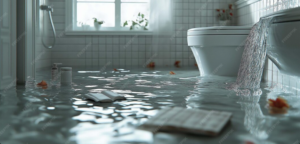
Each stage of this restoration process is crucial to safeguarding your property against long-term damage. From rapid water removal to thorough mould prevention, we address every aspect of flood recovery to restore your bathroom to its original condition. Plus our process makes sure that there are no risks of future issues.
If your bathroom has been affected by flooding, don’t wait—contact us today for a tailored, professional solution!
Is there something you need to do after our restoration process?
Yes– you can follow these steps to minimise any future risks..
- Regular Plumbing Maintenance:
Have your pipes and fixtures inspected regularly for leaks or signs of wear.
Early detection can prevent a sudden pipe burst or other plumbing emergencies.
- Install a Water Alarm:
Water alarms give alert to leaks or flooding before it becomes an issue.
Placing them near toilets, sinks, and tubs can give you an early warning of a potential issue.
- Monitor Water Pressure:
High water pressure can damage pipes over time, leading to leaks.
Consider installing a pressure regulator to maintain safe water pressure levels at your place.
Conclusion
FAQs
What are the costs of flood and water damage cleanup?
Each case is different. Some cases, we are able to estimate the costs over the phone but in large loss cases a site survey will be required.
What are potential health risks from flood damage?
This depends upon the nature of the water; black water, grey water or white. Black contains faecal matter which is extremely hazardous– so contact can lead to illnesses caused by bacteria, viruses and other pathogens leading from mild to severe/fatal symptoms. Don’t touch if there is a contamination risk
Will my home be restored to normal after the flood restoration?
Yes, the contents teams at Disaster Care Capital specialise in the claim management, validation, cleaning and salvage of soft and hard contents affected by water, flood, mould and fire damage.
What does a flooded bathroom mean?
A flooded bathroom means water has overflowed or leaked from fixtures like toilets, sinks, or baths, causing standing water and potential damage to floors, walls, and nearby areas.
How long does it take to dry out a flooded bathroom?
Drying out a flooded bathroom typically takes 24 to 72 hours, depending on how much water was involved, how quickly it was addressed, and whether water soaked into floors, walls, or cabinets. Minor surface flooding can dry within a day, while deeper saturation may require professional drying equipment and take several days to fully dry and prevent mould.
What to do if your toilet is flooded?
Turn off the water, stop using the toilet, mop up water, disinfect the area, and check for blockages or leaks.





