


The most important thing to understand about damp in a house is that there is no single solution. The right treatment depends entirely on what is causing the moisture, and treating the wrong cause wastes money, delays the actual fix, and often makes the problem worse.
Rising damp, penetrating damp, and condensation are three entirely different moisture mechanisms. Each one requires a different intervention. A dehumidifier helps with condensation but has no effect on penetrating damp from a failed roof. Repointing the brickwork fixes penetrating damp but does nothing for rising damp from a failed damp-proof course. Getting the diagnosis right is the prerequisite for everything else.
This guide covers how to identify which type of damp you have, what the correct solution is for each, and when professional assessment is the most cost-effective first step.
Identifying the Type of Damp You Have
The three types of damp have distinct patterns of appearance, location, and seasonal behaviour. Reading these patterns correctly tells you where to start.
Condensation: This is by far the most common type of damp in UK homes, responsible for the majority of surface mould growth in domestic properties. It appears in cold corners of rooms, around window reveals and frames, and behind furniture placed against external walls. It is worst in winter and improves markedly in spring and summer without any structural intervention. The mould from condensation is typically black or dark grey, grows in diffuse patches from cold spots, and wipes off with fungicidal cleaner, though it returns quickly if the underlying humidity is not addressed.
Rising damp: This affects ground-floor walls only. Look for a horizontal tide mark, a brown or yellowish stain running parallel to the floor at a consistent height, typically 300 to 900mm above floor level. Below this line, plaster is often soft, crumbling, or blowing away from the wall. White salt deposits (efflorescence) at low level are a strong indicator. Rising damp does not vary significantly with weather or season because the moisture source, groundwater drawn upward through masonry, is present year-round.
Penetrating damp: This is directly linked to rainfall; it appears after wet weather and dries out in dry periods. The damp patch is typically positioned directly inward from an external defect: below a parapet, adjacent to a window or door, under a chimney breast, or on a section of wall with defective pointing or cracked render. Upper floors and ceilings are commonly affected. The pattern of moisture follows the path water takes through the structure.
In practice, many UK homes have more than one type operating simultaneously, such as condensation on upper floors and penetrating damp at ground level. Dealing with each separately, in order of severity, is the correct approach.
Solutions for Condensation
Condensation is a moisture management problem. The air inside the property is too humid, and when it contacts cold surfaces, it deposits moisture. Two levers control this: reducing the humidity the air carries, and raising the surface temperature of cold surfaces.
Improve ventilation: This is the most effective and most neglected condensation solution. Moisture from cooking, bathing, drying clothes, and breathing must have a path out of the property. Ensure bathroom and kitchen extractor fans vent externally, not into ceiling voids. Trickle vents in windows should be open, not blocked. In heavily condensation-affected properties, a Positive Input Ventilation (PIV) system, which draws fresh air from a roof space and gently pressurises the building, is one of the most cost-effective whole-house solutions available, typically costing £300 to £700 installed.
Manage moisture at source: Dry clothes outside or in a vented tumble dryer rather than on radiators. Keep kitchen and bathroom doors closed during cooking and bathing. Use pan lids when cooking. These habits reduce the total moisture load the ventilation system has to manage.
Improve insulation on cold surfaces: Cold surfaces cause condensation because they drop the local temperature below the dew point of the air. Improving wall insulation, insulating cold external walls, and ensuring windows are double-glazed raises surface temperatures and reduces condensation formation.
Dehumidification: An industrial dehumidifier running in a property with significant condensation-driven damp removes moisture from the air at scale, reducing ambient relative humidity below 60%, the threshold below which mould cannot grow. Domestic units help with ongoing management. For properties where condensation has produced significant mould and elevated moisture in the building fabric, industrial desiccant units with 30 to 100+ litres per day extraction capacity are required to resolve the established moisture rather than simply managing it.
Treat established mould: Condensation mould established within wall fabric, plasterboard, or timber cannot simply be painted over. It requires HEPA vacuuming, professional-grade biocidal treatment, and post-treatment confirmation. Surface cleaning and fungicidal paint is not mould remediation; it suppresses visible growth temporarily but leaves spores within the substrate.
Solutions for Rising Damp
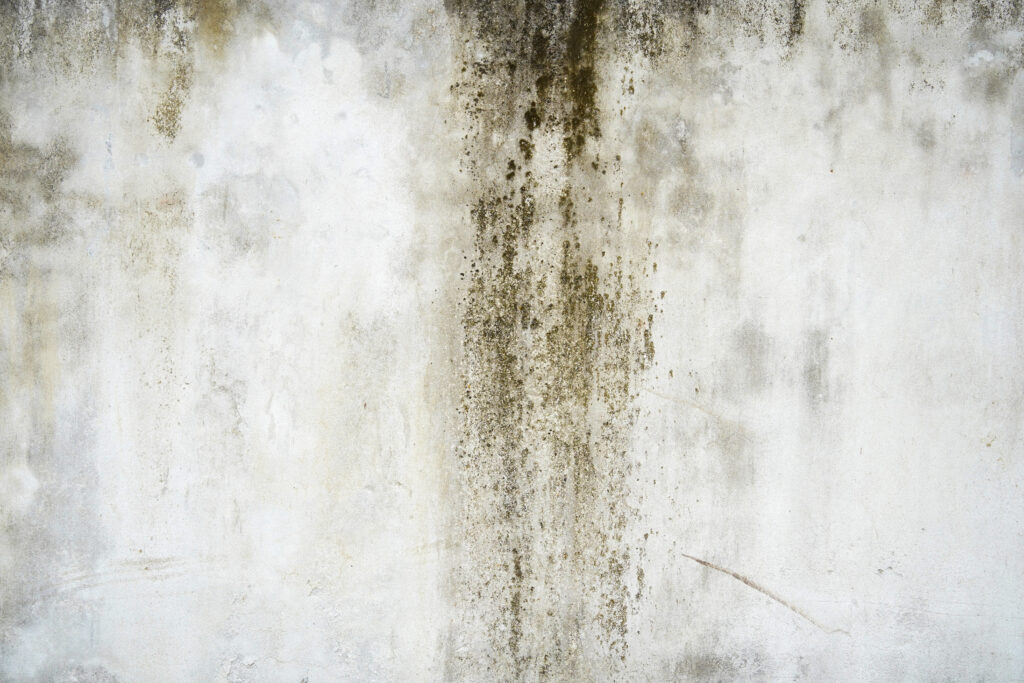
Rising damp requires structural intervention. Dehumidification, ventilation improvement, and surface treatments all manage the ambient effects but cannot address the capillary mechanism drawing moisture upward through the masonry.
The correct solutions for rising damp are as follows:
Chemical damp-proof course injection: This is the most commonly used treatment. A specialist drills a series of holes at regular intervals into the mortar course just above floor level and injects a silane or siloxane cream that cures to form a water-repellent barrier within the masonry. This interrupts the capillary pathway without damaging the brickwork. The treatment is carried out by a specialist damp-proofing contractor and typically comes with a guarantee.
Re-plastering to the correct specification: Once the new DPC has been installed, the existing plaster, which is salt-contaminated from years of moisture migration, must be replaced with a specialist renovating plaster rather than standard gypsum. Standard plaster applied over a salt-contaminated wall rapidly deteriorates and reproduces the same surface failure regardless of the DPC. The correct specification is essential.
Addressing external ground levels: Where raised external ground or paving has bridged the existing DPC, reducing the external ground level to sit at least 150mm below the DPC reinstates the barrier without any chemical treatment. This is the first check; a significant proportion of apparent rising damp cases are actually bridged DPCs that can be resolved by lowering paving or soil adjacent to the building.
Structural tanking. For basements and below-ground walls where rising damp and groundwater pressure are combined, a Type C drainage system or internal tanking membrane provides a more comprehensive solution than injection alone.
Read also: Why does condensation mould keep coming back?
Solutions for Penetrating Damp
Penetrating damp has one fundamental solution: find the external defect that is allowing water in and repair it. The internal damp then dries out once the source is eliminated.
The most common external defects and their fixes:
- Failed or blocked gutters and downpipes: Cleaning, repairing, or replacing guttering is one of the cheapest and most effective damp fixes available. Water cascading down a wall from a blocked gutter saturates masonry in a specific vertical pattern that is easy to identify once you know what to look for.
- Defective pointing: The mortar joints between bricks weather and deteriorate over decades. Failed pointing allows water direct access to the masonry core. Repointing with the correct mortar specification (lime-based for period properties, not cement) restores the weather barrier.
- Cracked or damaged render: Hairline cracks in external render allow water in while trapping it inside. Cracked render should be cut out, the substrate treated, and re-rendered. Do not simply paint over cracks.
- Failed window and door seals: Silicone sealant around window and door frames deteriorates and pulls away from the surface. Replacing failed sealant is inexpensive and eliminates a common source of water ingress around openings.
- Defective roof flashings: The lead or mortar flashings at chimney bases, roof edges, and around penetrations are a primary source of roof-level water ingress. Annual visual inspection of accessible flashings and prompt repair of any cracks or lifting is standard maintenance.
- Roof tile or covering failure: Missing or slipped roof tiles, failed valley and hip junctions, and deteriorated flat roof coverings allow water direct ingress into the roof structure.
After repairing the external defect, the affected internal wall fabric needs time and, in significant cases, assisted drying to return to its normal moisture content. Where plasterboard or plaster has been significantly saturated, replacing it after the fabric has been confirmed dry is usually the correct approach rather than attempting to dry it in place.
For guidance on damp-proof course injection and specialist contractors, check: Property Care Association, damp treatment guidance
When Professional Assessment Is the Right First Step
For properties where the damp cause is unclear, where multiple types may be present, or where previous treatment has failed to resolve the problem, a professional moisture survey is the most cost-effective first step.
A BDMA-accredited moisture survey using calibrated pin and non-invasive metres, combined with thermal imaging, produces a written report that:
- Maps the moisture distribution across all affected surfaces
- Identifies the most probable cause or causes
- Distinguishes between the three main damp mechanisms based on the pattern of readings
- Recommends the correct treatment sequence
This report prevents the most common and most expensive damp mistake: treating the wrong cause. A homeowner who spends £3,000 on chemical DPC injection when their problem is condensation has lost £3,000 and still has damp. A professional assessment that costs £300 to £600 prevents that mistake.
Disaster Care Capital provides BDMA-certified moisture surveys and professional damp treatment across London, correctly diagnosing the cause before recommending any solution. Call us today for a free same-day assessment.
For GOV.UK guidance on damp in rental properties and landlord obligations, check: GOV.UK, damp and mould health risks
Conclusion
Damp solutions work when they are matched to the correct cause. Condensation requires ventilation, humidity control, and dehumidification. Rising damp requires a new or repaired damp-proof course and correct re-plastering. Penetrating damp requires identifying and repairing the external defect that is allowing water in. Professional moisture assessment before committing to any treatment is the most reliable way to avoid treating the wrong problem, and the most cost-effective first step for any significant or persistent damp condition.
Frequently Asked Questions
How Long Does It Take to Fix Damp in a House?
Surface condensation treatment can produce visible improvement within weeks. Rising damp treatment, chemical injection plus re-plastering, takes 4 to 8 weeks from instruction to completion. For penetrating damp, the repair time depends on the external defect, but the internal damp dries within 2 to 6 weeks after the source is repaired, with industrial dehumidification accelerating this significantly.
How Do I Know if I Have Rising Damp or Condensation?
Rising damp affects ground-floor walls only, produces a horizontal tide mark at a consistent height, shows white salt deposits at low level, and does not vary with season. Condensation affects any floor, appears in cold corners and around windows, is worst in winter, and improves significantly in spring and summer. A calibrated moisture metre and thermal imaging survey gives definitive evidence where visual signs are ambiguous.
Can You Fix Damp Without a Professional?
Minor condensation problems, improving ventilation, treating surface mould with fungicidal products, adding trickle vents, can be addressed by homeowners. Rising damp and significant penetrating damp require professional diagnosis and treatment. Incorrectly diagnosing the cause and applying the wrong solution is more expensive than professional assessment in the first place.





