


Brown mould on walls is fungal growth that appears as tan, rusty, or dark-brown patches, usually caused by damp from condensation, leaks, or rising damp. It isn’t a single species — “brown” covers several moulds, and brown patches can also be water stains or, more seriously, wood-rotting fungi like dry rot. To deal with it: confirm it’s actually mould, fix the moisture source, clean small areas (under ~1m²) with a fungicidal wash while wearing PPE, dry the wall fully, then reseal. Larger, recurring, or timber-related growth needs a professional survey.
You spot brown mould on walls one morning — brown patches creeping across your wall. At first it looks like dirt or a water stain, but within days it spreads and gives off a musty smell. That’s the clue it isn’t just cosmetic.
Brown mould on walls can signal deeper problems: damp, hidden leaks, or poor ventilation. Left untreated it damages plaster, paint, and wallpaper, and the airborne spores can affect your health. At Disaster Care Capital, we’ve helped homeowners, landlords, and commercial property managers across the UK eliminate brown mould safely and permanently. This guide explains what is Brown Mould on Walls, how to tell it apart from a harmless stain (and from something more serious), how to remove it, and how to stop it returning.
What Is Brown Mould?
Brown mould on walls isn’t one organism — it’s a colour group covering several fungi that appear tan, rusty, beige, or dark brown. Because colour alone is unreliable (the same mould can look different depending on the surface, lighting, and how wet it is), brown mould is hard to identify by eye and often turns out to be a mix of species. The only definitive way to identify a species is laboratory or air-sample testing.
Moulds commonly behind brown patches in UK homes include Aspergillus, Cladosporium, Aureobasidium, Ulocladium, and Chaetomium. All thrive in damp, humid, poorly ventilated conditions. Some species feed on the cellulose in wallpaper, plasterboard paper, and timber, which is why brown growth can point to a deeper problem than the surface suggests.
Read also- how to get mould off clothes
Is It Brown Mould on Walls, a Water Stain, or Something Else?
Brown marks on a wall fall into three broad camps, and the right response is different for each.
| Sign | Brown mould | Water stain | Wood-rot fungus (dry/wet rot) |
|---|---|---|---|
| Texture | Fuzzy, powdery, or slimy; slightly raised | Flat and smooth | Cottony strands, or cracked, crumbling timber |
| Smell | Distinct musty, damp odour | Little or none | Strong damp, mushroom-like odour |
| Behaviour | Spreads and grows over time | Stays the same size once dry | Spreads through timber; wood becomes brittle |
| Where | Corners, behind furniture, cold walls | Below leaks, around pipes, on ceilings | On or near skirting, joists, floorboards, lofts, cellars |
A quick test: press gently on the patch (if safe). If the surface feels damp, soft, or spongy, there’s likely moisture trapped behind it — conditions that support active mould. If the area is dry, hasn’t changed, and has no odour, it may simply be an old water or tannin stain that can be sealed and painted over. When in doubt, get it assessed.
Common Causes of Brown Mould on Walls
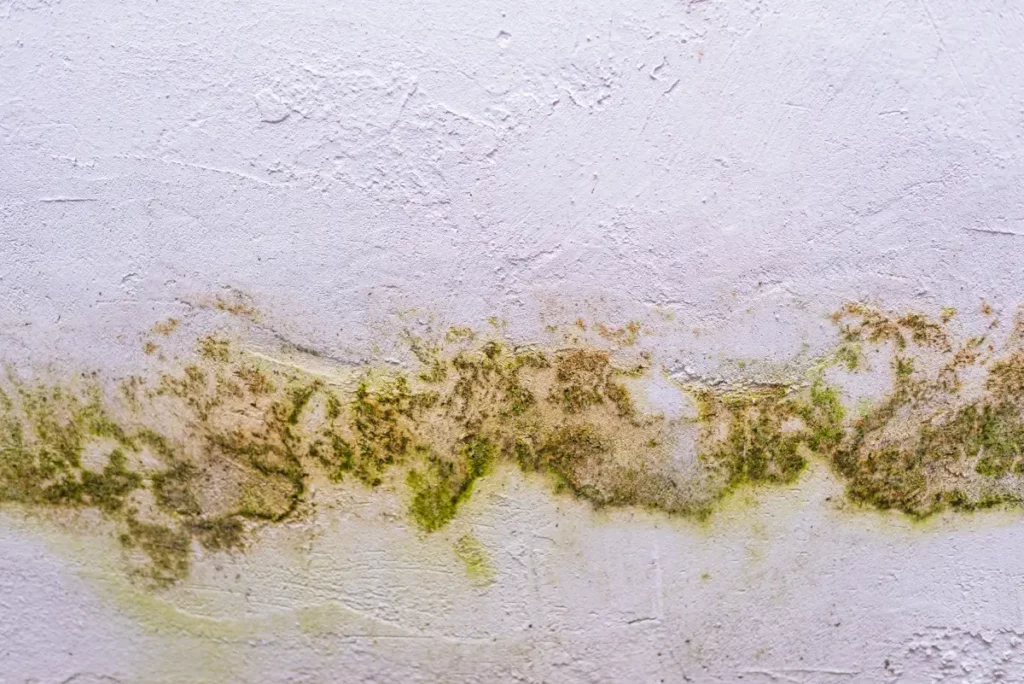
Brown Mould on Walls needs three things: moisture, warmth, and organic material. Remove the moisture and you remove the problem. The most frequent causes we see in UK properties are:
- Condensation and poor ventilation — common in bathrooms, kitchens, and behind furniture against cold external walls.
- Leaking pipes or roofs — even a slow drip keeps plasterboard damp enough to grow mould.
- Rising damp — moisture travelling up through masonry, often leaving a tide mark low on the wall.
- Penetrating damp or flooding — water entering through cracked render, failed seals, or after a storm or burst pipe.
- Poor insulation — cold spots where warm, moist air condenses.
Read also- is black mould in washing machine dangerous
Is Brown Mould on Walls Dangerous?
Brown Mould on Walls is generally less hazardous than toxic black mould, but it still poses real health risks — especially for children, older people, and anyone with asthma, allergies, or a weakened immune system. Common symptoms include:
- Persistent coughing, sneezing, or a runny nose
- Itchy eyes and throat
- Headaches and fatigue
- Worsening of existing respiratory conditions
The bigger concern is what brown mould signals. Because it’s often tied to significant moisture, leaks, or water damage, its presence usually means the underlying problem is worse than it looks. Damp and mould is also a recognised hazard under the UK’s Housing Health and Safety Rating System (HHSRS)
Check: NHS Mould and Damp Health Risks.
How to Remove Brown Mould on Walls Safely (Step by Step)
For a small, surface-level patch (under roughly 1m²) on a sound wall, you can attempt removal yourself. Here’s the safe method to remove brown mould on walls:
- Fix the moisture source first. Cleaning before you stop the damp guarantees the mould returns. Find the leak, condensation, or damp and resolve it.
- Protect yourself and the room. Wear gloves, goggles, and an FFP2 or FFP3 mask. Open external windows but keep internal doors closed so spores don’t spread, and lay down dust sheets.
- Apply a fungicidal wash. Use a specialist mould/biocidal wash and follow the contact time on the label. Never dry-brush or sand mould — that releases spores into the air.
- Wipe and remove, don’t just kill. Dead mould can still trigger allergies, so it must be removed, not just decolourised. Repeat on stubborn areas.
- Dry the area completely. Use a dehumidifier, heater, or fan. Lingering moisture is the main reason treatments and coatings fail.
- Reseal and redecorate. Once fully dry, apply a stain-blocking, mould-resistant primer, then finish with an anti-mould emulsion.
What to avoid
- Bleach — it lightens surface staining but doesn’t reach mould within porous walls, and UK guidance advises against it for routine mould cleanup. Use a proper fungicidal wash instead.
- Vinegar and bicarbonate of soda — popular online, but light-duty at best on minor surface marks; they aren’t a reliable substitute for a biocidal wash on porous building materials. Never mix bleach with vinegar or ammonia — it creates toxic fumes.
- Painting over mould — traps spores and moisture beneath the paint and causes regrowth.
- Ignoring the leak — without fixing the cause, the mould always comes back.
If the mould keeps returning, covers more than about a square metre, involves timber, or anyone in the home is vulnerable, it’s time for professional help.
Check also- Our Mould Remediation Servcies
Professional Mould Removal: How It Works
At Disaster Care Capital, we follow a systematic process to remove brown mould on walls safely and permanently:
- Site assessment — we identify the root cause (condensation, leaks, or structural damp) using moisture meters and, where needed, thermal imaging.
- Containment — affected areas are sealed off to stop spores spreading to other rooms.
- Treatment — professional-grade biocides and HEPA-filtered air scrubbing remove mould at the source; porous materials beyond saving are safely removed and bagged.
- Drying and dehumidification — industrial dryers remove excess moisture so the problem doesn’t recur.
- Restoration — we repair damaged plaster, redecorate with anti-fungal coatings, and verify the area is safe.
Check: Health and Safety Executive standards
How Much Does Brown Mould Removal Cost in the UK?
Cost depends on the size and severity of the affected area, ease of access, and whether materials need replacing. As a rough 2026 guide, small surface-level treatments typically start in the low hundreds of pounds, medium multi-room remediation with drying runs into four figures, and extensive or structural cases (including strip-out and reinstatement) can reach several thousand. A professional survey means you only pay for what’s needed and avoids repeated callouts from failed DIY fixes.
For a full breakdown and a free, no-obligation quote, see our dedicated guide: Mould removal price UK.
Preventing Brown Mould on Walls
- Fix leaks immediately — even minor drips feed mould.
- Ventilate daily — open windows after showering and cooking, and use extractor fans.
- Control humidity — aim for 40–60% indoor humidity and use a dehumidifier in problem rooms.
- Avoid drying clothes indoors without ventilation.
- Improve insulation and heating — reduce the cold surfaces where condensation forms.
- Check lofts, cellars, and behind furniture regularly for early signs of damp.
Why Choose Disaster Care Capital
We’re not just cleaners — we’re property restoration specialists with years of experience handling domestic and commercial mould across the UK. Our service includes certified remediation technicians, 24/7 emergency response, eco-friendly cleaning products, insurance-approved restoration documentation, and long-term prevention strategies.
Conclusion
If you’ve noticed brown mould on walls, don’t ignore it. Behind that patch could be a hidden leak, structural damp, or — where timber is involved — a wood-rotting fungus that threatens the building itself. Cleaning a small patch yourself can help, but lasting protection means identifying and fixing the root cause.
At Disaster Care Capital, we eliminate mould safely, prevent its return, and restore your property to a healthy condition. Contact our specialists today.
FAQs on Brown Mould on Walls
1. What causes brown mould on walls?
Brown mould is usually caused by moisture from leaks, condensation, or rising damp. It thrives on warm, damp surfaces like plaster or wallpaper.
2. Can I paint over brown mould?
No. Painting over mould traps moisture underneath and allows regrowth. The surface must be cleaned, dried, and treated before painting.
3. How do professionals remove brown mould?
Experts use industrial biocides, air filtration, and moisture control equipment to remove mould completely and prevent it from returning.





