


Block of Flats Flood Damage in the UK is one of the most legally and practically complex property situations a leaseholder can face. When water comes from the flat above, from a communal pipe, or from a roof failure, the question of who is responsible, and whose insurance pays for what, involves multiple parties, overlapping legal obligations, and insurance policies that were not designed to work smoothly together.
This guide maps out the different scenarios clearly, explains the legal framework, and covers the practical steps that get restoration started even when parties are in dispute.
Why Flood Damage in Blocks of Flats is Legally Complex
In a block of flats, the property exists in legal layers. There is the freehold, the ownership of the land and the structural building, and there are the individual leasehold interests, each of which gives the leaseholder exclusive possession of their flat. The relationship between these layers, governed by the lease and by statutory law, determines who is responsible for what when something goes wrong.
Several features of flat ownership create complexity after a flood:
Scenario 1: Water Comes From the Flat Above
This is the most common source of flood damage in blocks of flats, a burst pipe, an overflow, or a failed appliance in the flat above causing water to enter the flat below through the ceiling, walls, or floor structure.
The legal position:
In English law, there is no automatic liability on a neighbour simply because water came from their flat. To establish liability, you generally need to demonstrate one of the following:
- Negligence: the upper flat owner knew or should have known about a risk (a slow leak they ignored, an appliance they failed to maintain) and failed to act
- Nuisance: a continuing or repeated interference with your enjoyment of your property
- Rylands v Fletcher: a legal principle applying where something dangerous has been accumulated and has escaped, causing damage
In practice, if the upstairs neighbour’s washing machine hose failed without any prior warning and with no negligence, they may not be legally liable for your damage. Their contents insurance may cover their own property; your claim for damage to your flat would need to go through the block’s buildings insurance or your own contents insurer.
The practical route:
- Report the damage to the buildings insurer (held by the freeholder or managing agent) immediately, structural damage to the flat below is typically covered under the block’s buildings policy
- Your leaseholder’s contents insurance covers your possessions and any internal fixtures you are responsible for under your lease
- If negligence by the upper flat is established, a subrogation claim (one insurer recovering from another) may follow, but this is a matter for the insurers to resolve, not for you to manage
Scenario 2: The Flood Comes From a Communal Pipe or Roof
If the source of flooding is a communal system, a shared pipe serving multiple flats, the roof, a communal water tank, shared drainage, or the external fabric of the building, the freeholder is almost certainly responsible.
The freeholder’s obligation to maintain the structure and exterior of the building is established under the lease and under Section 11 of the Landlord and Tenant Act 1985 (which applies to residential leases of less than seven years, though many long leases include equivalent obligations by their own terms).
What this means:
- Damage to the fabric of your flat caused by a failure in a communal system is a claim against the freeholder’s buildings insurance
- The freeholder or managing agent must instruct the investigation and repair of the communal defect
- You have the right to request a copy of the buildings insurance policy and to be kept informed of the claim
If the freeholder or managing agent is slow to act, you can contact the local authority’s housing team, and in serious cases, apply to the First-tier Tribunal for an order requiring the freeholder to carry out necessary repairs.
Scenario 3: Flood Originated in Your Own Flat
If the source of the flooding is within your own flat, a burst supply pipe, a failed appliance, an overflow from your own bath or sink, you are responsible for the cause. Your buildings insurance (either your own if you are a freehold owner, or the block buildings policy if you are a leaseholder and the block policy covers internal pipe failures within individual flats) covers damage to the property fabric.
Where the water has spread beyond your flat and caused damage to shared areas or to the flat below, the same principles apply in reverse. Your insurer may face a subrogation claim from the downstairs flat’s insurer or from the freeholder’s buildings insurer.
Key point: check what your block’s buildings insurance policy covers for internal pipe failures. Some block policies cover internal pipe failures within individual flats as part of the buildings cover; others require each leaseholder to hold their own buildings insurance for the internal fabric. Your lease will specify what is and is not your responsibility.
What the Buildings Insurance Typically Covers in a Block
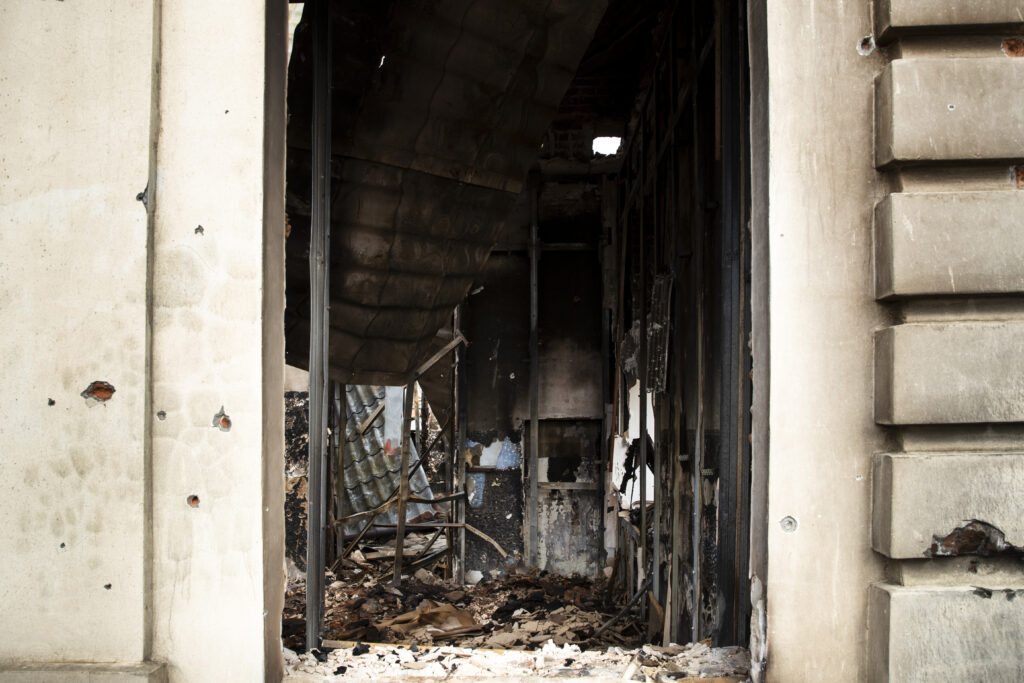
The freeholder’s buildings insurance for a block of flats typically covers:
- The structural fabric of the building, walls, roof, floors, foundations, windows, and external doors
- Communal areas, stairwells, corridors, and shared facilities
- Fixtures and fittings within individual flats that are considered part of the structure (interpretation varies by policy)
- Damage caused by water escaping from communal systems
- Damage to individual flats caused by structural failures
It does not cover:
- Leaseholders’ personal possessions and contents
- Improvements and additions made by individual leaseholders
- Loss of rent or temporary accommodation for leaseholders (though some block policies include this)
Raed also- Flood-Resistant Home Design
What Leaseholders Must Do to Protect Their Own Contents
The block buildings insurance does not cover your possessions, your furniture, your electronics, or the contents of your flat. That is your own responsibility.
Leaseholders should hold their own contents insurance policy that specifically includes escape of water cover, accidental damage, and, if you are in a basement or ground floor flat or in an area with surface water flood risk, flood cover.
It is also worth checking whether your lease makes you responsible for any internal fixtures, fitted kitchen units, bathroom suites installed by you, that may not be covered by the block buildings policy. Your solicitor or a specialist leasehold adviser can clarify this.
The Role of the Property Managing Agent
In most London blocks, the day-to-day management of the building, including holding the buildings insurance, co-ordinating maintenance, and managing emergency situations, falls to a property managing agent appointed by the freeholder.
When a flood occurs, the managing agent should:
- Be notified immediately by any affected leaseholder
- Report the claim to the block’s buildings insurer
- Instruct emergency containment and investigation of the source
- Co-ordinate the restoration programme across affected properties
- Keep all affected leaseholders informed of progress
In practice, managing agents vary enormously in their responsiveness. A slow managing agent is one of the most common causes of delayed flood restoration in London blocks, and delayed restoration means progressive damage, mould establishment, and compounding costs.
If your managing agent is not responding adequately, you can escalate in writing, reference the Property Ombudsman or Property Redress Scheme (to which all managing agents must belong), and, in serious cases, contact the local authority.
For further guidance on leasehold flood damage and insurance, check: LEASE, Leasehold Advisory Service
How to Get Restoration Started When Parties Disagree

The most practically damaging situation in a block of flats flood is when liability is disputed and no party will authorise restoration to begin. Every day of delay is a day of additional moisture penetrating building fabric, a day closer to mould establishment, and a day of additional damage that will cost more to remediate.
Practical steps when parties disagree:
- Notify all relevant parties in writing immediately, the managing agent, the freeholder’s insurer, and any directly involved neighbour. Written notification creates a record and starts the clock running on any formal obligations.
- Instruct your own insurer to begin their assessment in parallel — do not wait for the other party’s insurance to move first.
- Request emergency interim drying under your own contents policy if the buildings insurer has not yet authorised works.
- Instruct a BDMA-certified restoration company to provide a professional moisture assessment and scope of works. This documentation is accepted by all major UK insurers and gives any party the evidence base to authorise works, regardless of who ultimately pays.
- Do not allow mould to establish while parties negotiate. The cost of mould remediation added to the cost of the original flood damage compounds rapidly. If necessary, authorise interim protective drying under your own insurer’s emergency provisions.
Disaster Care Capital has extensive experience managing flood restoration in London apartment buildings, coordinating with freeholders, managing agents, and multiple insurers simultaneously. Call us today for a fast professional assessment.
For tenant and leaseholder rights information, check: Shelter England, repairs and flood damage in flats
Conclusion
Flood damage responsibility in a block of flats depends on where the water came from and what the lease says. Water from a communal system is the freeholder’s responsibility. Water from an upper flat requires negligence to be established for personal liability. Water from your own flat is your responsibility for the cause, with the block buildings policy covering resulting structural damage.
The practical priority, regardless of who is ultimately responsible, is to get moisture assessment and drying underway immediately. Delayed restoration in a block of flats harms multiple properties simultaneously and creates compounding liability for everyone involved.
Frequently Asked Questions
If my upstairs neighbour floods me, who pays?
The block’s buildings insurance typically covers structural damage to your flat regardless of source. For your neighbour to be personally liable, negligence usually needs to be established, if the flood was an unforeseen failure with no prior warning signs, their personal liability may be limited and the claim routes through the building’s insurance.
Does the freeholder's insurance cover my flat after a flood?
The freeholder’s buildings insurance covers the structural fabric of the building and communal areas. Whether it covers internal fixtures within your flat depends on your specific policy and lease. It does not cover your personal possessions, you need your own contents insurance for those.
What is the difference between buildings and contents cover in a flat?
Buildings insurance covers the structure, walls, floors, ceilings, fitted kitchen units, windows. Contents insurance covers your personal possessions, furniture, electronics, clothing, and anything not permanently fixed. In a block, the freeholder holds buildings insurance; each leaseholder is responsible for their own contents insurance.





